




Most advice about marketing a personal injury firm is opinion. This guide is built from what the firms actually doing the work have in place right now. In October 2026 we pulled the Google results for 25 personal injury searches across seven cities, the map results in each CBD, and then studied the 25 firms that kept showing up: their authority and links, how much content they have and how often they add to it, what sits on their service pages and articles, where and what they post on social media, and every live Meta ad we could find from a personal injury advertiser in Australia.
The short version is that the firms winning in search are winning on authority, on pages built for a city and a claim type, and on content that answers questions with real numbers. On social, almost nobody is winning, which is the biggest opening in the market. On Meta, the big brands test hundreds of short-lived videos a month while smaller firms find one ad that works and leave it running for a year or two.
If you run or market a personal injury practice, use this as the benchmark: what the market has, what the leaders have, and where the gaps are.
- Search: Ahrefs Australian results for "personal injury lawyer", "compensation lawyers" and "workers compensation lawyer" in Sydney, Melbourne, Brisbane, Gold Coast, Perth, Adelaide and Newcastle, plus four national searches. Google Maps top 15 from each CBD. 134 firms appeared; the 25 that showed up most often became the core set.
- Authority and traffic: Ahrefs Domain Rating, referring domains, ranking keywords, top pages and 25 months of traffic history for each firm. These are estimates, so use them to compare firms with each other.
- Content: every XML sitemap we could read, to count pages and articles and estimate how often each firm publishes.
- Pages: 148 pages scraped and measured (50 service pages, 74 top-traffic articles and 24 homepages) for words, headings, tables, images, video, authors, dates, schema, links, forms, chat, reviews and page weight.
- Social: 90 days of posts on Facebook, Instagram, LinkedIn and TikTok, plus YouTube channels. All 1,417 posts were read and coded by theme.
- Meta ads: the Meta Ad Library for Australia, 1,602 live personal injury ads from 83 advertisers, with the ad images saved and the instant form questions recorded.
- Some of the firms in this study are PixelRush clients. They are measured exactly the same way as every other firm.
Who are the personal injury firms winning online in Australia?
Maurice Blackburn is the clear leader. It ranked in the organic top 10 for 15 of the 25 searches we checked, appeared in the map results in four CBDs and gets an estimated 79,000 Australian visits a month from Google, almost double the next firm. Slater and Gordon (44,000), Gordon Legal (29,000), Law Partners (24,000) and Shine (22,000) make up the rest of the top five.
Two things stand out once you get below the national brands. Johnston Withers, an Adelaide firm with a Domain Rating of 26, draws about 12,800 visits a month, more than any other state or local firm in the country. Almost all of it comes from three Adelaide practice pages: car accident lawyers, personal injury and workers compensation. LHD Lawyers does something similar on a national scale. On a Domain Rating of 23 it gets about 7,400 visits a month from 227 keywords in the top three, carried by its city office pages, city and claim pages such as car accident lawyers in Melbourne (which ranked #7 nationally for "car accident lawyer"), and payout guides. And Turner Freeman wins more searches than its authority suggests it should. With a Domain Rating of 37 it ranked in the top 10 for 13 of our 25 searches across five cities, entirely through city landing pages such as "personal injury lawyers Sydney: car accident law".
| Firm | Type | DR | AU visits a month | Referring domains | Keywords in top 3 | Pages that rank |
|---|---|---|---|---|---|---|
| Maurice Blackburn | National | 64 | 79,209 | 3,651 | 2,063 | 650 |
| Slater and Gordon | National | 60 | 44,478 | 2,393 | 1,057 | 443 |
| Gordon Legal | National | 55 | 29,130 | 881 | 746 | 552 |
| Law Partners | National | 41 | 24,481 | 1,497 | 679 | 244 |
| Shine Lawyers | National | 55 | 22,198 | 3,963 | 868 | 499 |
| Turner Freeman | National | 37 | 17,344 | 2,086 | 332 | 477 |
| Johnston Withers | Adelaide | 26 | 12,782 | 1,125 | 209 | 89 |
| Brydens | Sydney | 40 | 9,383 | 996 | 131 | 175 |
| LHD Lawyers | National | 23 | 7,443 | 1,121 | 227 | 184 |
| Hall Payne | National | 32 | 7,298 | 2,883 | 341 | 244 |
| Splatt Lawyers | Brisbane | 36 | 6,883 | 1,237 | 142 | 125 |
| GMP Law | NSW | 34 | 6,274 | 1,363 | 284 | 236 |
| Tindall Gask Bentley | Adelaide | 33 | 5,751 | 1,188 | 108 | 275 |
| Taylor & Scott | Sydney | 35 | 5,582 | 803 | 155 | 238 |
| Littles Lawyers | National | 30 | 4,461 | 975 | 125 | 276 |
| Travis Schultz & Partners | Brisbane and Gold Coast | 29 | 2,588 | 1,112 | 55 | 87 |
| Stacks Goudkamp | Sydney | 26 | 2,525 | 1,228 | 87 | 118 |
| Stephen Browne | Perth | 21 | 2,413 | 1,082 | 48 | 45 |
| The Personal Injury Lawyers | Brisbane and Gold Coast | 17 | 2,373 | 1,123 | 56 | 90 |
| Arnold Thomas & Becker | Melbourne | 31 | 2,240 | 976 | 106 | 127 |
| Smith's Lawyers | National | 37 | 1,970 | 1,226 | 49 | 133 |
| DBH Lawyers | Adelaide | 30 | 1,945 | 916 | 42 | 55 |
| Burke Mead | Newcastle | 8 | 1,470 | 743 | 31 | 72 |
| Arnold Dallas McPherson | Melbourne | 26 | 1,007 | 962 | 42 | 66 |
| Separovic | Perth | 3 | 739 | 652 | 23 | 34 |
Treat these as estimates. Ahrefs models traffic from keyword volumes, so it tends to undercount firms that win lots of small local searches. Arnold Thomas & Becker is a good example: Ahrefs puts it at about 2,240 visits a month from 226 ranking keywords, down from a peak of about 8,500 in October 2025, but it ranked #3 for "personal injury lawyer Melbourne" in our checks. The comparisons between firms hold up better than any single figure.
Search is only half the picture. The map results, which sit above the organic results for every local search we checked, are won by a different group of firms. We cover that in the section on cities below.
How much authority does a PI website need to rank?
More than most firms think, but less than the national brands have. The national brands sit between DR 55 and 64. The local firms that rank well in their own city sit between DR 21 and 41. Below about DR 20, firms still rank, but mostly through the map pack and their homepage.
Domain Rating tracks traffic closely, with a rank correlation of 0.75 across the 25 firms. LHD is the main exception, which is the point: pages built for specific cities and claims can outrun authority. The raw number of referring domains tracks traffic less well (0.63). The reason shows up when you look at the small firms. Separovic has 652 referring domains and a DR of 3. Burke Mead has 743 and a DR of 8. Most small PI sites carry several hundred links from directories, scraped copies and spam pages, and those links count for almost nothing. Ten links from Australian news sites, legal publishers, hospitals, sporting clubs and councils will do more than a thousand from directories.
The bottom of that chart matters most for anyone planning a content budget. The number of articles a firm has and the number it published in the last 12 months are the weakest predictors of traffic in the set. Publishing on its own doesn't move a PI site. What moves it is the number of pages that rank in the top three, and those come from authority plus pages built for specific searches.
Low-DR firms can still win in their own city. A Gold Coast firm with a DR below 1 held three organic spots and three map pack spots on the Gold Coast, and Adelaide firms with DRs under 6 rank across several Adelaide searches. Local relevance, reviews and a well-built city page can beat national authority on a city search. They can't beat it on a national one. For more on what local ranking takes, see our guide to SEO for personal injury law firms.
How much content do personal injury firms have, and does more help?
The big firms have a lot. Slater and Gordon has about 1,670 URLs in its sitemaps, Turner Freeman 1,660, Maurice Blackburn 1,470 and Gordon Legal 1,340. A typical state firm has 150 to 400. The surprise is how little of that content brings in traffic.
Turner Freeman has published about 1,390 blog posts, more than any firm in the set, and blog URLs make up about 2% of the traffic on its top 50 pages. Slater and Gordon has around 1,140 articles and media releases and gets close to nothing from them. Maurice Blackburn's 619 posts bring in about 5%, and its best-performing article is about probate. At the other end, Law Partners has 251 articles and they carry 60% of its top-page traffic. GMP Law gets 53% from 252 articles, and Splatt 48% from just 87.
The difference is what the articles are about. The firms getting traffic from articles write about money: what a claim is worth, how payouts are calculated, and what other people received.
What content brings personal injury firms traffic?
Three kinds of page carry almost all of the traffic in this market. Every firm that does well has at least one of them working.
Service pages built for a claim type and a city
For the national brands, the work is done by practice pages and by city versions of those pages. Maurice Blackburn's traffic is 47% service pages and 24% city and practice pages such as "car accident lawyers in Melbourne". Slater and Gordon, Gordon Legal, Turner Freeman, Shine and Hall Payne all run a grid of practice pages across cities and states.
Gordon Legal has pushed this furthest. On top of about 300 service pages, it publishes around 920 pages in a /pc/ folder targeting combinations like "workers compensation lawyers Melbourne" and "TAC car accident lawyers Banyule", and only four classic articles. Its traffic went from about 12,000 a month in late 2024 to about 30,000 in October 2026, the strongest two-year growth of any large firm in the set. Pages like these only work when each one has something specific to say about that place and that claim. A thousand copies of the same page with the suburb swapped out is the kind of content Google's spam updates are written to catch.
Payout and calculator guides
Where articles do carry a site, they are almost always about money:
- Law Partners: a whole person impairment calculator and guide (its single biggest page, ahead of the homepage), a pain and suffering calculator, medical negligence payouts, TPD payouts and WorkCover payout examples
- GMP Law: how much you can sue for emotional distress, medical negligence payout examples, and a brain injury compensation guide
- Splatt: a personal injury claims guide and payout calculations
- Smith's: whether WorkCover covers stress leave
- Arnold Dallas McPherson: WorkCover damages with worked payout examples
- LHD Lawyers: a compensation case studies page (about 640 visits a month), a workers compensation payout guide that sets out each state's weekly payment step-downs, and a TPD payout guide
These pages answer the question people are actually asking before they call a lawyer, which is "what is my claim worth?". Most firms dodge that question with "every claim is different". The firms that answer it with real figures, tables and worked examples get the traffic. Our article on marketing by claim type covers which claims are worth building content for first.
The homepage
For smaller firms, the homepage is often doing all the work. The Personal Injury Lawyers get 53% of their top-page traffic from the homepage, Stephen Browne 48%, Separovic 41% and Smith's 36%. That is a fragile position. One ranking change on one page can take out most of the firm's search enquiries, which is roughly what happened to Splatt in mid 2025 when its traffic fell from a peak of about 30,600 visits a month to under 7,000.
How often are PI firms publishing, and is it working?
A handful of firms publish a lot. GMP Law added about 172 articles in the last 12 months, around 14 a month, and is one of the few firms whose traffic grew (up 61% on last year). Maurice Blackburn added about 160 and Travis Schultz about 107. Most firms add between two and four a month, and several have almost stopped.
Publishing more is not enough on its own. Travis Schultz published more than 100 articles and its traffic is down 32% on last year. Taylor & Scott has 528 articles, published roughly one new one in 12 months, and is down 20% (LHD Lawyers says it acquired the firm in March 2026, which explains the quiet). Volume helps when the articles target questions people search, link to the right service pages and carry real information. GMP's articles do all three.
The wider trend is down. 20 of the 25 firms get less Google traffic than they did a year ago, and the median firm has lost 23%. Some of that is AI Overviews answering informational questions without a click, which hits explainer content hardest. The firms that grew (Gordon Legal, GMP, Tindall Gask Bentley, Littles and Johnston Withers) grew on service pages, city pages or payout content, which are the pages people still click on. We look at what this means for law firms in is SEO dead for law firms and how to rank in AI search.
What goes into a personal injury page that ranks?
We took the main personal injury page, a second service page (workers compensation or motor vehicle) and the three highest-traffic articles from every firm, and measured what was on them.
middle half: 854 to 2,089
middle half: 835 to 2,498
11% have none
Shine writes at grade 5 to 7
48 script tags
A typical ranking service page has about 1,400 words, eight H2 headings, 19 internal links, an enquiry form and "no win no fee" somewhere on it. The longest quarter of service pages run past 2,100 words. Articles are a little shorter at a median of about 1,200 words, but the spread is wider. The best articles in the set are 2,400 to 3,400 words.
The gaps on service pages are about trust. Only 6% of service pages name a lawyer anywhere on the page, and none has an author box, even though a quarter of them mention accredited specialists. Almost none show a date. For pages about claims worth tens or hundreds of thousands of dollars, it's a strange thing to leave out, and it's the first place a challenger firm can do better.
On articles, about half name a lawyer as the author and only 12% have a proper bio box. Tables appear on 15% of articles and embedded video on 3%. One in five shows an updated date. FAQ markup is used the wrong way round: 40% of service pages carry FAQ schema but only 11% of articles do, even though the articles are where the question-and-answer content lives.
The national brands' pages are built differently from the local firms' pages. National brand articles are shorter and flatter: a table of contents on 4% of them, payout figures in 15%, Article schema on 44%. Local firms are five times more likely to add a table of contents and twice as likely to give payout figures. The national brands' advantage is brand, links and scripts, and their articles are no better than the local firms' articles. A local firm can beat them on the page itself.
What does the best PI article in Australia look like?
The best article we found is GMP Law's medical negligence compensation and payout examples. It runs to about 2,500 words with nine H2s and 13 H3s, and has nine tables. Each table is a real case: the case name with the dollar outcome, then a short description of what happened. It has a named lawyer as the author with a bio box, published and updated dates, a table of contents, an FAQ section with schema, 29 internal links and 27 dollar amounts tied to settlement language in the body. It answers the question people type ("how much do hospitals pay out for negligence?") with numbers instead of "it depends".
| Page | Words | Tables | Author and bio | Dates | Internal links | Why it works |
|---|---|---|---|---|---|---|
| GMP Law, medical negligence payout examples | 2,536 | 9 | Named lawyer, bio box | Published and updated | 29 | Every claim type illustrated with a real case and figure |
| Law Partners, whole person impairment calculator and guide | 2,364 | 4 | Named author | Published | 20 | Maps impairment bands to entitlements and dollar ranges. Its biggest page, about 1,290 visits a month |
| Burke Mead, how to claim work injury compensation | 2,546 | 0 | Accredited specialist, bio box | Published and updated | Several | Step-by-step process by a named specialist, on one of the lightest pages in the set |
| Splatt, guide to personal injury claims compensation | 2,873 | 0 (8 on its main service page) | Reviewed-by line only | Shown | 62 | Table of contents, FAQ schema and two embedded videos |
What do weak PI pages have in common?
The weak pages share the same problems:
- Thin answers. 14% of articles are under 600 words. Some FAQ-style pages have a title, a date and almost nothing else.
- No links out. 11% of articles have no internal links in the body at all, so they send no one to the service page that would turn a reader into an enquiry.
- Payout questions with no payouts. One national brand's page on permanent impairment payout amounts in Victoria runs to about 680 words with no table, no author and no figures in a usable format.
- No structure. 11% of articles and 8% of service pages have no H2 headings, including two main PI pages.
- No name, no date. Ten of the 25 firms show no named lawyer on any of the three articles we checked. 31% of articles show no date.
- Reading level. The medians sit at a school grade of 8 to 9, which is fine. A few pages read at grade 14 to 16, which is a legal memo, not a page for an injured person.
What does the user experience look like on PI websites?
Every page we checked had a phone number linked to call. Beyond that, the conversion setup on a typical PI service page looks like this: an enquiry form (78%), "no win no fee" (92%), a reviews or testimonial widget (56%), a star rating (48%), a chat widget (44%), a calculator or claim checker (26%) and a sticky call bar on mobile (24%).
Calculators and quick claim checks are the local challengers' tool of choice. The Personal Injury Lawyers lead their homepage with a compensation calculator and a "30 second claim check". Separovic offers a free compensation calculation, LHD Lawyers runs a multi-step claim check in its homepage hero, Smith's a two-minute claim check, and Slater and Gordon puts "start your free claim check" in its main call to action. Chat is mostly HubSpot, LiveChat or Zendesk, and Trustindex is the most common review widget, followed by Elfsight, Birdeye, Podium and Google review plugins.
Most homepage headlines are brand lines rather than a promise about a claim. Only four firms put the service and the location in the main heading.
| Firm | Homepage headline | First call to action | Reviews shown above the fold |
|---|---|---|---|
| Maurice Blackburn | Expert legal support when you need it most | Get in touch | "3,000" reviews |
| Slater and Gordon | We'll take it from here | Start your free claim check | "800" reviews |
| Law Partners | Injured? We'll help Make it Right. | Phone number button | 4.9 out of 5 |
| Shine Lawyers | Together, we can right wrong | Enquire / Free claim check | None |
| Splatt Lawyers | QLD Compensation Lawyers Brisbane | Call / Free claim review | Review widget |
| Separovic | WA's Expert Car Accident and Work Injury Lawyers | Get my free calculation | 4.7, 300 reviews |
| The Personal Injury Lawyers | QLD, Gold Coast & Brisbane Compensation Lawyers | Compensation calculator / 30 second claim check | None |
| Arnold Dallas McPherson | No Win, No Fee Personal Injury Lawyers in Victoria | Phone number | None |
| Burke Mead | With you every step of the way | Phone / Enquire now | 126 reviews |
| DBH Lawyers | With you. For you. | Phone, then service tiles | Review widget |
The bigger the brand, the heavier the page. Maurice Blackburn's road injury page is about 1.9 MB of HTML with 67 script tags, and its homepage carries 126 script tags. National brand service pages run a median of 31 external scripts against 15 for local firms. For someone searching on a phone at a hospital or on the side of a road, a page that loads in one second instead of four is part of the conversion rate. Our guides to the best PI law firm websites, law firm website design and PI landing pages go further into layout, and the 60 second rule covers what happens after the form is sent.
Does it change from city to city?
A lot. The national brands dominate page one in Sydney, Melbourne and Newcastle and barely feature in Perth, Adelaide and on the Gold Coast, where state and local firms own the results.
The map results tell their own story. Ratings are almost identical everywhere (a median of 4.7 to 4.85 stars in every city), so the number of reviews is what separates the listings. Sydney is the hardest market: Law Partners holds the top map spot with 1,588 reviews on its Sydney profile, and the next two listings have more than 300 each. Newcastle is the easiest: the top listing has 94 reviews and the median across the top 15 is 26.
| City | National brands' share of page one | #1 on Google Maps | Reviews on that listing | Median reviews, Maps top 15 | Who holds the map packs |
|---|---|---|---|---|---|
| Sydney | 36% | Law Partners | 1,588 | 155 | Law Partners and established Sydney firms such as Stacks Goudkamp and Garling & Co |
| Melbourne | 48% | Arnold Dallas McPherson | 109 | 165 | Specialist local firms: Polaris, Maxiom, Henry Carus, Longton. No national brand in any pack |
| Brisbane | 33% | The Personal Injury Lawyers | 147 | 130 | Queensland firms. No national brand in any pack |
| Gold Coast | 17% | The Personal Injury Lawyers | 180 | 59 | Local firms, with Maurice Blackburn and Turner Freeman in one pack each |
| Perth | 21% | Stephen Browne | 558 | 105 | Stephen Browne and LHD Lawyers (in all three Perth packs, 376 reviews), plus WA specialists |
| Adelaide | 16% | Paul Alvaro Lawyers | 90 | 77 | DBH in three packs, plus Tindall Gask Bentley, Turner Freeman and Adelaide boutiques |
| Newcastle | 48% | Burke Mead | 94 | 26 | The national brands: Shine in three packs, Law Partners and Turner Freeman in one each, alongside Burke Mead |
What this means in practice:
- Sydney and Melbourne are the two markets where a new firm needs both authority and a big review count. In Melbourne the map packs belong to specialist local firms, which shows a focused firm with 100 to 250 reviews can still take a pack spot from the national brands.
- Brisbane and the Gold Coast are local markets. Queensland firms hold every Brisbane map pack and most of the Gold Coast ones, and Gold Coast results reward local relevance more than authority.
- Perth belongs to WA firms and one national firm that has built a real local presence. Stephen Browne's 558 reviews make it the benchmark, LHD Lawyers' Perth listing (376 reviews) sits in all three Perth map packs, and the other national brands hold only one in five page-one spots.
- Adelaide is the most local market in the country. National brands hold 16% of page one, and Johnston Withers, DBH and Tindall Gask Bentley have the results to themselves.
- Newcastle is the easiest map market to enter on reviews, but also the one where the national brands have planted city pages and offices.
Building reviews is the single most reliable lever in local results. Our guides to getting Google reviews for a law firm and Google Business Profile for lawyers cover how, and our Sydney, Melbourne, Brisbane, Perth and Adelaide pages cover each market.
Where do personal injury firms post on social media?
Everywhere, and mostly the same post. All 25 firms have Facebook and LinkedIn, 22 have Instagram and 22 have a YouTube channel, but only eight have TikTok. Most post the same image or video to Facebook, Instagram and LinkedIn on the same day.
uploads/wkMaurice Blackburn10.510.08.84.30.6Brydens4.19.60.56.00.5Shine6.05.84.90.90.1GMP Law4.34.03.6·1.0Turner Freeman4.13.83.8·0Law Partners4.83.72.0·0.5The Personal Injury Lawyers4.14.41.2··Arnold Dallas McPherson3.23.03.0·0Gordon Legal2.22.31.81.00.5DBH2.62.31.900Splatt2.72.60.9·0.5Littles2.92.60.200Smith's3.42.3000Travis Schultz2.21.91.5·0.1Tindall Gask Bentley1.31.21.3·0.4Slater and Gordonn/a0.53.2·0Arnold Thomas & Becker1.00.51.11.0<0.1Johnston Withers0.70.70.7·0Burke Mead0.90.50.6··Hall Payne001.6·0LHD Lawyers0.40.40.3·0.2Stephen Browne0.3·0.3·0Separovic0·0··Taylor & Scott0·0·0Stacks Goudkamp000·<0.1
Maurice Blackburn is the only firm running a real multi-platform operation: around 34 posts a week across five platforms, named lawyers on camera, campaign content and a North Queensland Cowboys sponsorship that it turns into stories. Brydens posts heavily on Instagram and TikTok, though its biggest TikTok of the quarter was a criminal law video. Five firms that rank well in search and Maps are close to absent on social.
Follower counts need care. Several of the biggest Facebook pages (Brydens at 16,000 followers, Smith's at 23,000, Law Partners at 30,000) earn a median of zero to two reactions per post. Those audiences were bought with page-like ads years ago, and they don't read the page. A follower count on a PI firm's Facebook page tells you about past ad spend, not about reach.
What do PI firms post, and what gets engagement?
We read and coded all 1,417 posts. The content firms make most of earns the least, and the content they make least earns the most.
Legal explainers and ad-style promotions are 38% of everything posted and earn below-typical engagement (0.70x and 0.52x the account's normal post). Staff, culture, sponsorship and real client stories are 18% of posts and earn up to twice the normal engagement. Real case results are 2% of posts. For an industry whose whole offer is that it gets people paid, the proof is almost missing from social media.
Sponsorship posts do well partly because they borrow someone else's audience. The biggest jump over an account's usual numbers in the 90 days was a reel The Personal Injury Lawyers posted as a collaboration with Queensland Rugby League about a Gold Coast referee. It drew about 2,300 engagements, roughly 330 times that account's typical post, but most of that came from the league's followers rather than the firm's. Firms with a sponsorship can do the same: post with the club, not just about it.
Real client stories travel furthest on the brand accounts. Maurice Blackburn's story of Robert, a coal miner of 43 years, was its top TikTok of the quarter with 161,000 plays, and its earlier story of John, a school abuse survivor, passed 500,000 plays. Even so, the best brand videos are matched or beaten by individual lawyers posting on their own accounts, which we cover below.
Explainers only break out when they are tied to a real case or a real number. Splatt's general "what does duty of care mean?" posts earned three to six engagements. Its breakdown of a real Supreme Court decision, "liability was admitted, so why did the court only award $8,002.75?", did 38,000 plays on Instagram, and a post about a pedestrian struck on a dark dirt road reached about 349,000 views on Facebook (probably with some paid help).
Format matters too. Carousels earned 1.35 times a typical post across Facebook, Instagram and LinkedIn, ahead of video (1.0x) and single images (0.86x). And the "free consultation" tile is the weakest post in the market. One firm posted the same "need free legal advice?" carousel seven times in 90 days. Our guide to video marketing for law firms covers how to make the formats that do work.
What does LinkedIn look like for personal injury firms?
LinkedIn is where PI firms are most consistent and least ambitious. Twenty-one of the 25 posted in the last 90 days, at a median of 1.5 posts a week. Engagement on LinkedIn is higher than on Facebook (a median of 18 per post against 3), but most of it comes from staff and colleagues liking awards, promotions and work anniversaries.
Slater and Gordon (33,000 followers) and Maurice Blackburn (28,000) have the biggest pages. Travis Schultz gets the most from each post, a median of 49 engagements on 3,200 followers, by mixing lawyer-led explainers with its own conference and community work. The posts that top almost every firm's LinkedIn are about people: Tindall Gask Bentley's top three posts on every platform were two long-service anniversaries and a retirement after 48 years.
For a PI firm, LinkedIn's real job is referrals and recruitment. It reaches the GPs, physios, unions, accountants and other lawyers who send injury work, and the lawyers you want to hire. Posts about your people and your results do that job. Generic claim explainers don't.
What are PI firms doing on YouTube and TikTok?
Very little that works. Twelve of the 25 firms uploaded something to YouTube in the last year, and no firm has built an audience. The biggest channel, Law Partners, has 1,130 subscribers after 233 videos. GMP Law uploaded more than 50 videos in 12 months for a median of 23 views each.
Big YouTube view counts on law firm channels are almost always paid. GMP's most-viewed video has 3.7 million views and 48 likes. Maurice Blackburn's has 6.5 million views and 47 likes. Arnold Thomas & Becker's top video has 368,000 views and 12 likes, and four cuts of a Gordon Legal ad have 129,000 to 421,000 views with almost no likes. These are TV and video ads run as YouTube ads. The best organic results on any core-firm channel belong to Johnston Withers' 2019 question-and-answer series with named lawyers, which earned 12,000 to 13,500 views a video and about 14 likes per 1,000 views. The series stopped in 2021. LHD Lawyers is trying a version of this in 2026 with one-minute client stories (Colin, Vilma, David and Emily), which draw 2,500 to 3,200 views each, while its 2024 explainers on motor vehicle and TPD claims have passed 8,000 to 14,800 views.
TikTok is where the opening is widest. Only five of the 25 firms posted there in the last 90 days, at a median of about 300 plays a video.
Which individual PI lawyers are building an audience on social?
The brand accounts are only half the picture. We also looked for Australian lawyers posting about injury claims on their own TikTok, Instagram, YouTube and LinkedIn accounts, and found 27 who posted in the 90 days to 22 October 2026. The ones with real reach are almost all individuals at small firms, and on TikTok they beat every firm account in the study.
wiseguy_qld, a Queensland injury lawyer, has 10,600 TikTok followers, more than Maurice Blackburn's 8,021. Fadi Chahine's median video gets about 80,000 plays, 68 times Maurice Blackburn's. Only six of the 25 firms in this study have a lawyer posting on a personal account at all, and five of those six only post on LinkedIn.
Who is posting on TikTok?
| Lawyer | Firm | Followers | Posting rate (last 90 days) | Typical video | Best video | What they make |
|---|---|---|---|---|---|---|
| wiseguy_qld | Not stated (Queensland) | 10,600 | Two videos | 45,300 plays | $1.3 million for a state school teacher: 217,900 plays, 4,174 shares | Real Australian payouts, two to five minutes to camera |
| Fadi Chahine | Innova Legal, Sydney | 7,990 | About one a week | 79,900 plays | KFC and an $8 million award: 553,400 plays, 8,005 shares | Case breakdowns in 60 to 90 seconds, ending on a question |
| Warren Bennett ("the TPD Lawyer") | WKB Lawyers | 7,150 | Six a week | 1,500 plays | Aged care workers and TPD: 80,700 plays, 551 saves | One TPD video per occupation or condition |
| Christian Foyle | Foyle Legal, Perth | 4,260 | Quiet since May 2026 | 900 plays | WA double demerits: 368,500 plays | WA road rules and what to do after a crash |
| Anthony Bazouni | Prominent Lawyers, Sydney | 2,340 | Two a week | 820 plays | Can you sue a school for bullying?: 117,900 plays, 1,646 saves | "Is it legal to..." hooks that lead into injury claims |
| Stephen Young | Stephen Young Lawyers, Sydney | 450 | Quiet in the window | Under 1,000 plays | Explainer: 3,365 plays | Explainers and client stories |
Fadi Chahine's firm account has 15 followers and no videos. Prominent Lawyers' has four. On TikTok the lawyer is the brand.
What separates the big accounts from the rest is the type of video, far more than how often they post. Across 269 videos from ten PI-focused lawyers, the ones built on a real case or payout had a median of 37,700 plays. Explainers and tips had 1,102.
The best case videos follow the same pattern. They open on a dollar figure or "no damages", name a defendant people recognise (KFC, Kmart, Woolworths, a state school, a pub), get through the facts in under 90 seconds and finish with a question such as "should Kmart be responsible?". That gets shares, and shares are what push a video into the For You feed: 1.4% of the people who watched Fadi Chahine's KFC video shared it.
A narrow niche works too. Warren Bennett posts about six times a week and does nothing but TPD, one occupation or condition at a time. His aged care workers video drew 80,700 plays and 551 saves.
Posting a lot of short, generic clips does nothing. One Queensland lawyer posted 19 TikToks and 15 YouTube Shorts in the 90 days for a median of two engagements each.
Who is posting on LinkedIn?
LinkedIn is where lawyers at the bigger firms post as themselves, and they consistently get more engagement than their firm's page.
| Lawyer | Firm | Followers | Posts in 90 days | Median engagement | What works for them |
|---|---|---|---|---|---|
| Travis Schultz OAM | Travis Schultz & Partners, Brisbane | 12,800 | 11 | 91 | Commentary on real court decisions, community work, recognition |
| Jeremy Roche | Gain Lawyers, Brisbane | 15,700 | 3 | 36 | Founder posts and recruitment |
| Kevin Sawers | Walker Law Group, Newcastle | 8,300 | 10 | 25 | Scheme reform commentary and case studies |
| Sach Fernando | Maxiom Injury Lawyers, Melbourne | 4,270 | 4 | 95.5 | Personal stories and recognition |
| Daniel Opare | Shine Lawyers, Melbourne | 1,570 | 4 | 99 | Career news and media appearances |
| Chantille Khoury | Law Partners, Sydney | 1,000 | 2 | 65.5 | Commentary on psychological injury reforms |
| Garbis Kolokossian | GMP Law, Sydney | 1,900 | 6 | 22 | Staff milestones and opinion |
Travis Schultz & Partners stands out. Five of its lawyers post on their own profiles, more than any other firm, and the principal's personal profile has four times the followers of the firm page. Jeremy Roche and Kevin Sawers both have more than 15 times the followers of their firm pages.
The single most engaged LinkedIn post by a PI lawyer in the window was personal. Sach Fernando wrote about growing up in a refuge after family violence, and it drew 328 reactions and comments.
Commentary on real decisions does nearly as well. Travis Schultz explaining a Court of Appeal decision on his own profile drew 142 engagements, three times his firm page's typical post.
What about Instagram?
Nobody has cracked it yet. We found only two PI lawyers posting regularly on personal Instagram accounts. Sach Fernando (1,400 followers) gets a median of 51 engagements a post, mostly from client-story reels made with his firm. Another Queensland lawyer has 20,000 followers but a median of 10 engagements a post, which points to an audience bought with ads. On Instagram, the lawyers who appear in their firm's reels reach more people through the firm's account than through their own.
What do the lawyers with real reach have in common?
They are one person on camera, in a narrow lane (one scheme, one state or one format), they lead with specific numbers, and none of them works at a national firm. How often they post matters less than what they post: wiseguy_qld posted twice in 90 days and still has the highest typical engagement of any PI creator we found. For a firm, the opportunity is to put one of its own lawyers on camera talking about real cases every week, under the lawyer's name, with the firm's support behind it.
What are personal injury firms running on Meta ads?
We found 1,602 live personal injury ads from 83 advertisers in the Meta Ad Library. Sixteen of the 25 core firms are advertising, and the top five advertisers run 43% of all the ads.
The Ad Library doesn't show spend for these ads, so the count tells you how much a firm tests, not how much it spends. What it does show clearly is two different ways of running Meta.
794 ads, 3% older than 6 months
433 ads, 24% older than 6 months
The big brands churn creative. Every one of GMP Law's 266 ads is less than 18 days old, and every one of Maurice Blackburn's is less than 24 days old. Most of it is video, with a presenter to camera or a client story, and it is replaced weekly or monthly. Smaller firms do the opposite. They find an ad that works and leave it running. Eleven advertisers have an ad that has been live for more than a year, and the longest has been running for 843 days.
TPD is the most Meta-friendly claim type. It works nationally, it needs no accident to have happened, and the hook ("you have insurance in your super and may not know it") is a natural scroll-stopper. It is the main product of the TPD specialists and the largest category for Shine and Smith's. Motor vehicle and workers compensation still lead on volume.
The most common hook is eligibility: "check if you can claim". It appears in 41% of ads, ahead of the free consultation offer (37%) and no win no fee (30%). Client stories appear in 18% and specific dollar figures in about 10%, mostly from GMP, Law Partners and the TPD specialists.
Where do the ads send people?
About 37% of ads go to a Meta instant form, 31% to a service page and 17% to a dedicated landing page. Instant forms are where the qualifying happens, and 499 ads show their form questions in the Ad Library.
| Instant form question | Ads using it |
|---|---|
| How would you like us to contact you? | 128 |
| What time is best to contact you? | 125 |
| What state are you from? | 115 |
| What injuries have you suffered? | 84 |
| What legal service do you need? | 68 |
| Did the accident occur in NSW? | 32 |
| Did the accident occur within the last 12 months? | 32 |
| Has a claim already been lodged with the CTP insurer? | 32 |
| Has the insurer determined you were at fault? | 32 |
| Would you prefer to speak with a male or female lawyer? | 31 |
GMP's CTP form is the clearest example of filtering before the phone call. It asks where the accident happened, whether it was within the time limit, whether a claim has been lodged and whether the insurer has found the person at fault. A firm that has worked out which answers turn into matters can stop paying its intake team to have the same conversation with people who can't claim. Our guide to personal injury intake covers what to do with the answers.
Which PI ads have run the longest?
These are the ads that have survived longest, plus two from the biggest advertisers to show their current style. Images are saved copies from the Ad Library on 22 October 2026. Each card links to the ad's Ad Library record, which Meta removes once an ad is switched off.


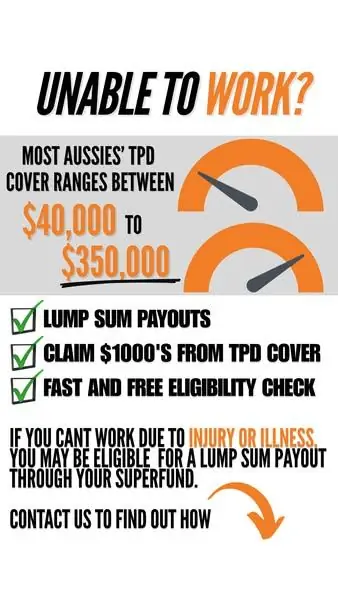

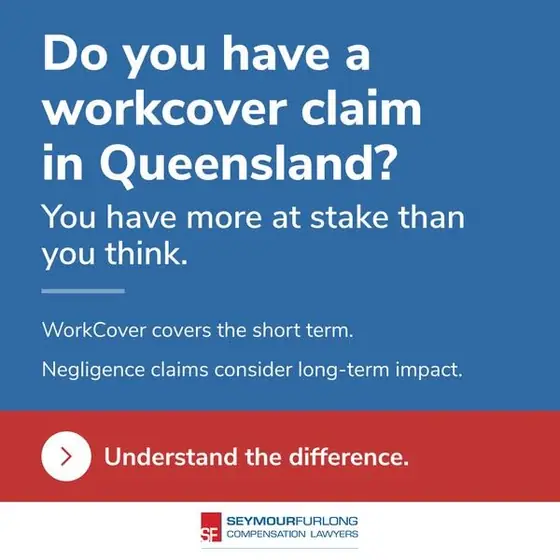


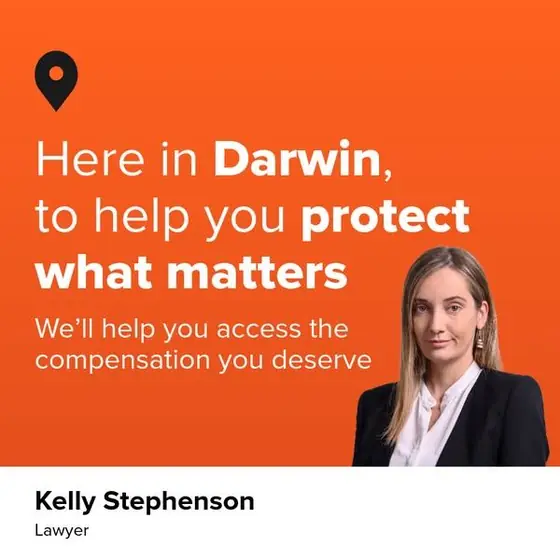
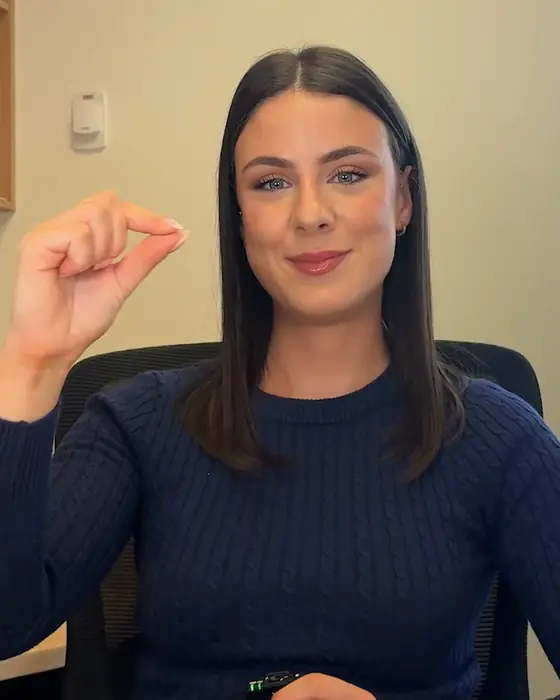

The long runners have the same shape. Each one makes a single, simple promise about one claim type (often in one state), uses educational or eligibility copy rather than brand messaging, and sends people to a short form. None of them is a brand awareness ad.
A few cautions from the same data. Around 9% of PI ads speak to the viewer about their own condition ("your injury", "unable to work due to illness"), which is the most common reason Meta rejects or restricts injury ads. Ads with dollar figures and client stories need to be accurate and backed up under the conduct rules and Australian Consumer Law, and "no win no fee" needs its conditions disclosed. Queensland and the Northern Territory have their own rules on advertising personal injury services. Our guides to lawyer advertising rules in Australia and Facebook ads for law firms cover the detail, and our Meta ads for law firms page explains how we run them.
What does a personal injury firm need to compete?
Here is the full benchmark in one table: the typical figure across the 25 firms, what the leaders have, and a sensible target for a state or local firm trying to take market share.
| Area | Market typical | The leaders | Target for a challenger firm |
|---|---|---|---|
| Domain Rating | 32 | 55 to 64 (national brands) | 30 to 40, from links that are real, local and relevant |
| Pages that rank | About 175 | 450 to 650 | 200 or more, mostly service, city and payout pages |
| Service pages | One main PI page plus a handful of claim pages | A page for every claim type in every city they serve | One page per claim type, then one per city you can genuinely serve |
| Service page length | 1,400 words, 8 H2s, 19 internal links | 2,000 words or more with payout tables | 1,500 to 2,500 words, a table, a named lawyer and a date |
| Articles | About 250 on the site, two to four new a month | 250 payout and calculator guides carrying 50% or more of traffic | Two to four a month, focused on what a claim is worth |
| Article features | Author on 47%, table on 15%, video on 3% | Named author, bio, dates, tables, contents, FAQ schema | All of those, on every article |
| Google reviews (main city listing) | 100 to 150 | 550 (Perth) to 1,588 (Sydney) | Above the median for your city within a year (see the city table) |
| Social posting | 1.5 to 3 posts a week, same post on every platform | Five platforms, 30 or more posts a week | Two or three posts a week per platform, built around people, clients and results |
| Short-form video | Five of 25 firms active on TikTok | A few hundred thousand plays from individual lawyers | A lawyer on camera every week, talking about real cases |
| YouTube | 12 of 25 uploading, mostly under 300 views a video | No one with an audience | A question-and-answer series with named lawyers, cut into Shorts |
| Meta ads | 5 to 25 ads, or 100 to 266 at the big brands | Weekly creative refresh, video, eligibility forms | Five to ten tested ads per claim type, keep the winners, refresh the rest monthly |
The temptation, looking at a table like this, is to start on every row at once. That is how firms end up with a blog nobody reads, an Instagram account with three followers and a Meta budget that never had enough money behind it to learn anything. The firms in this study that are pulling ahead did one thing properly before moving to the next: Johnston Withers on Adelaide service pages, Law Partners on payout content and reviews, Gordon Legal on city pages, GMP on articles and Meta volume.
For most state and local firms, the order that makes sense is reviews and the map listing first (it is the fastest route to calls), then service and city pages, then payout content, then a lawyer on camera, then paid social that reuses everything built so far. We set out how to plan that one channel at a time in how to write a law firm marketing plan, and how much lawyers spend on marketing covers the budget side.
If you'd like to see how your firm compares with these benchmarks, our personal injury marketing team can run the same analysis on your site and your competitors in your city. Book a call and we'll show you where you stand and which channel to fix first.
About this data. Search, traffic and authority figures are Ahrefs estimates taken between 20 and 22 October 2026. Traffic history uses Ahrefs' all-country figure because the Australian history was unavailable. Posting rates come from sitemap dates and are indicative. Social figures cover 24 July to 22 October 2026, capped at 30 posts per account. Meta ad counts are live ads on 22 October 2026 and show no spend. Firms and creators are named from public information. Some firms in this study are PixelRush clients and are measured the same way as every other firm. Nothing here is legal advice.
Want us to implement these strategies for you?
Book a free strategy call and let's discuss how we can grow your business.
Book Your Free CallContinue reading
More on Law Firm Marketing
How Do Criminal Lawyers Get More Clients? (It Comes Down to What a Matter Is Worth)
How Australian criminal lawyers get more paying clients. Why the value of the matter decides which marketing works, what Google Ads clicks really cost, why reviews and the map listing matter so much, how the leading firms do content without stuffing it, the lawyers getting millions of views on social media, and why referrals carry the serious matters.
How Should Law Firms Use Email Marketing? (The Six Emails Worth Sending)
Email rarely wins a law firm a new client on its own, but it decides what happens to the enquiries, past clients and referrers you already have. The six emails worth sending, what to send leads who don't sign, getting reviews and referrals, the Spam Act and privacy rules for Australian firms, what Queensland's injury advertising law means for email, deliverability, tools and what to measure instead of open rates.
How Do You Write a Law Firm Marketing Plan? (Build One System at a Time)
A law firm marketing plan that works is a series of marketing systems, built one at a time. How to work out who your clients are and where they look for help in each practice area, check capacity, set a ceiling per signed client, crack one channel before adding the next, turn each channel into a system that runs without the partners, scale it to compete with top-tier firms, and spot the systems that are costing money without doing their job.
What Should a Law Firm Website Include? (84% of Your Ad Clicks Are on a Phone)
What an Australian law firm website should include, page by page. What goes above the fold, how to structure practice area and location pages, lawyer profiles, enquiry forms that qualify without creating conflicts, what the conduct rules allow, how fast it needs to be, WordPress vs builders vs static sites, what it costs in Australia, and how to brief a designer and compare quotes.