
Your law firm's Google Business Profile might be the most underutilised marketing asset you have.
Most law firms set it up once, forget about it, and wonder why they're not showing up when potential clients search for legal help in their area.
The truth is, an unoptimised profile isn't just a missed opportunity. It's costing you clients every single day.
This guide breaks down exactly how to set up, optimise, and maintain your Google Business Profile (GBP) to generate consistent, high-quality enquiries for your firm.
Key Takeaways
- Your Google Business Profile is the most important local SEO asset your firm has, and most law firms are leaving serious money on the table by not optimising it properly.
- Google's local algorithm ranks firms based on three things: proof you're a real business, proof you serve the area, and proof other local entities recognise you.
- Your website and GBP must align perfectly. Every service and category on your profile needs a corresponding page on your website with matching titles.
- Reviews matter, but not in the way most firms think. Having more reviews than competitors doesn't guarantee higher rankings.
- Local links from chambers of commerce, sponsorships, and community organisations can move rankings faster than almost anything else.
- Consistent NAP (name, address, phone number) information across all platforms is non-negotiable.
Understanding Google Business Profile for Law Firms
Google Business Profile is a free tool that allows businesses to manage how they appear across Google Search and Google Maps.
For law firms, an optimised profile is the single most important factor in whether potential clients find you when they're ready to hire a lawyer.
When someone searches "personal injury lawyer near me" or "family lawyer Sydney," Google selects the most relevant businesses from its local listings and shows them in what's called the local pack.
That's the map with three results that appears above the organic search results.
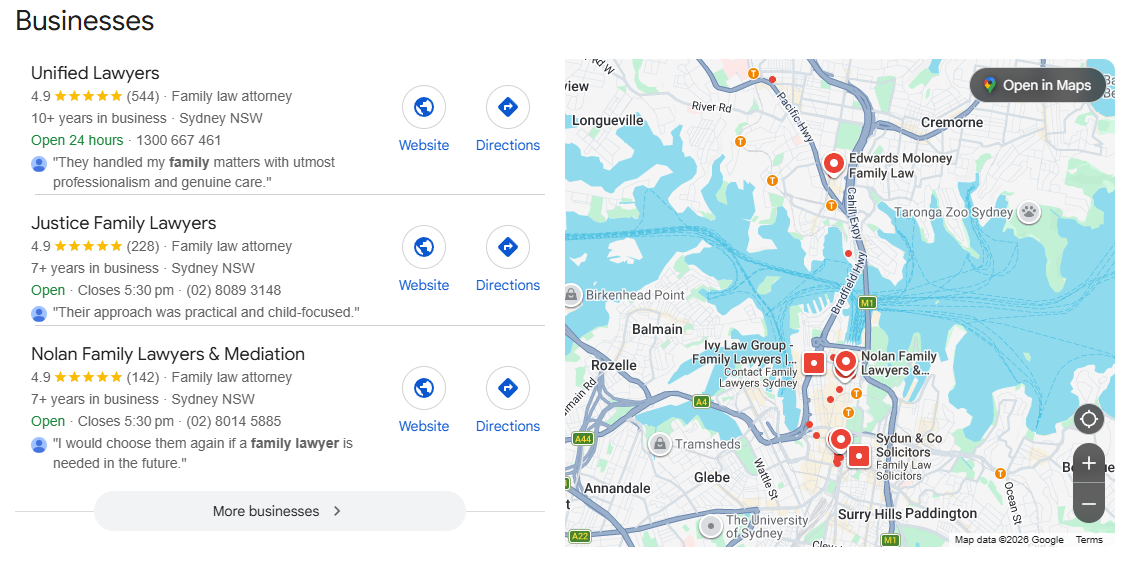 The local pack dominates above organic results — if your firm isn't in these three spots, most searchers will never see you.
If you're not there, you're effectively invisible.
Research consistently shows that businesses with optimised profiles are significantly more likely to be seen as trustworthy by potential clients, and more likely to receive calls and direction requests. The firms that understand this and act on it have a clear advantage over those that don't.
Key Insight
Your Google Business Profile is often the first thing a potential client sees. It's not a directory listing — it's your firm's digital storefront. Treat it like one.
What Google's Local Algorithm Actually Wants
Here's what most law firms and their digital marketing agencies miss.
Google's local algorithm isn't just evaluating your website the way traditional SEO does. It's trying to answer a fundamentally different question.
When someone searches for a family lawyer or personal injury solicitor in their area, Google needs to identify firms that can actually serve that client in that location. Not firms that write generic legal blog posts. Not firms with a pretty website and a weak local presence.
Google needs three things before it will confidently show your firm:
- Proof you're a real business operating from a legitimate location
- Proof you serve the area with relevant, locally-specific content and signals
- Proof other local entities recognise you through citations, links, and community presence
Miss any one of these and you'll struggle to rank in the local pack, regardless of how much you're spending on other marketing.
Why Position Four is Effectively Useless
Most of the value in local search sits in the top three positions.
Firms ranked fourth or lower receive a tiny fraction of clicks compared to those in the local pack. If your firm isn't in the top three, you're essentially invisible to the majority of people searching for your services.
This is why optimising your GBP isn't a nice-to-have. It's the foundation of your local marketing strategy.
Expert Tip
Don't just think about ranking nationally. Use tools that show your local visibility across a geographic grid so you can see exactly where you're visible and where you're not.
Setting Up and Claiming Your Law Firm's GBP Listing
If you haven't claimed your GBP listing yet, that's the first thing to fix.
Start by searching for your firm on Google Maps. Sometimes a listing already exists even if you didn't create it, especially for firms that have been operating for a while. If you find an existing listing, claim it and update all the information. If nothing comes up, create one from scratch through Google's Business Profile manager.
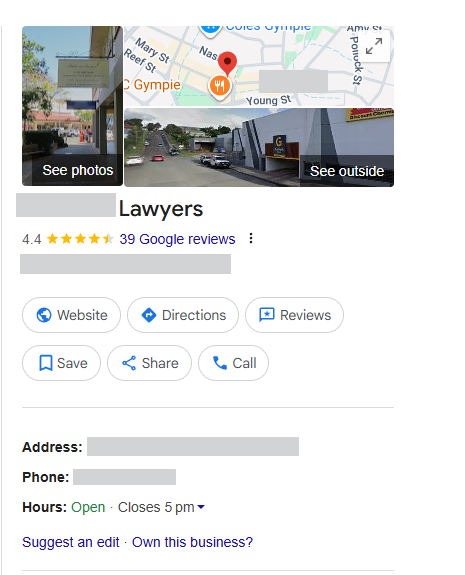 A fully optimised GBP listing with complete business information, photos, and active review management.
When creating your listing, you'll need to provide:
- Your firm's legal business name
- Physical address (a real office address, not a virtual one)
- Primary phone number
- Website URL
- Business category
Once submitted, Google will verify your listing, usually via postcard sent to your business address or via phone. Don't skip this step. Verification unlocks the full suite of features including insights, messaging, and the ability to respond to reviews.
Quick Win
Verify your listing immediately. Unverified profiles can't respond to reviews, post updates, or access performance insights — all of which directly impact your local rankings.
A Note on Virtual Offices
Google has become increasingly strict about businesses using virtual offices or serviced addresses.
For law firms trying to rank in multiple locations, this matters. Physical locations with genuine local presence consistently outperform virtual office setups.
If you're a multi-location firm, prioritise building genuine local presence in each market rather than listing multiple virtual addresses.
The Most Important Thing Most Law Firms Get Wrong: GBP and Website Alignment
This is where the majority of law firm marketing falls apart.
It's worth spending time here because getting it right will move the needle faster than almost anything else you can do.
Your website and your Google Business Profile need to be in complete alignment. Not loosely aligned. Not similar. Identical in terms of the services and categories you've listed.
Here's why this matters. Google's local algorithm cross-references what your GBP says you do with what your website says you do. When they match perfectly, Google gains confidence that your firm is legitimate and genuinely provides those services in that area.
When they don't match, that confidence drops. And so do your rankings.
The Core Service Page Strategy
Think about every service listed on your Google Business Profile. Every category. Every practice area.
Each one of those needs a dedicated page on your website.
So if your GBP lists "personal injury lawyer," "workers compensation lawyer," and "public liability claims," you need individual pages for each of those. And the page titles need to include the service name and your location, character for character.
"Personal Injury Lawyer Sydney" on your GBP needs to match "Personal Injury Lawyer Sydney" in your page title. Not "Sydney's Top Personal Injury Attorneys." Not "Injury Compensation Claims."
The exact match.
This level of alignment tells Google that your website and your profile are talking about the same firm, offering the same services, in the same location.
Key Insight
The number one reason law firms don't rank in the local pack isn't a lack of reviews or content. It's a mismatch between what their GBP says they do and what their website says they do.
How to Audit Your Gaps
Here's a simple way to find out where you stand.
Take every category and every service listed on your GBP and create a checklist. Then go through your website and tick off each one that has a dedicated, well-structured page. Anything without a tick is a gap that's likely costing you local rankings.
For most law firms we look at, this reveals a significant number of missing pages. It's common to find firms with hundreds of indexed URLs on their website but critical service pages missing entirely.
The reason? They've been publishing blog posts instead of building out their core service architecture.
Blog posts have their place, but they don't replace dedicated service pages. If you're going to prioritise anything on your website for local rankings, start here.
Optimising Your Law Firm's GBP Listing
Once your listing is claimed and your website architecture is in order, optimise every element of the profile itself.
Accurate and Consistent Information
Your business name, address, and phone number (NAP) need to be consistent everywhere they appear online. Your GBP, your website, your law society listing, legal directories, and any other platforms where your firm is listed.
Inconsistencies confuse Google and erode the trust signals your profile needs to rank.
Use the exact same format everywhere. If your office address includes "Level 3" on your website, it needs to say "Level 3" on your GBP too. These details matter more than most people realise.
Selecting the Right Business Categories
Your primary category is one of the most important decisions you'll make in your GBP setup. Google uses categories to determine which searches your listing is eligible to appear in.
Don't just select "Lawyer" or "Law Firm" as your primary category. Get specific.
If personal injury is your core practice area, "Personal Injury Attorney" should be your primary category. Add secondary categories for each additional practice area you want to rank for.
The more relevant your categories are to what potential clients are actually searching for, the better your chances of appearing in those searches.
Pro Tip
Beyond "Lawyer," use specific practice area categories like "Personal Injury Attorney" or "Family Law Attorney" to appear in niche searches that your competitors are missing.
Writing a Compelling Business Description
Your business description gives Google and potential clients more context about what your firm does and who you serve.
Keep it clear and focused. Lead with your primary practice areas, mention your location, and give people a reason to choose you over the firm next door.
Avoid generic statements like "we provide exceptional legal services" because every firm says that. Instead, be specific.
"We help victims of workplace injuries and motor vehicle accidents in Queensland claim the compensation they're entitled to" is far more compelling, and far more useful to Google.
The Truth About Reviews and Rankings
Reviews are important, but not quite in the way most people think.
Having more reviews than your competitors doesn't automatically mean you'll outrank them. There are firms sitting outside the top three local results with more reviews and better ratings than the firms above them.
Reviews are a trust signal, not a ranking guarantee.
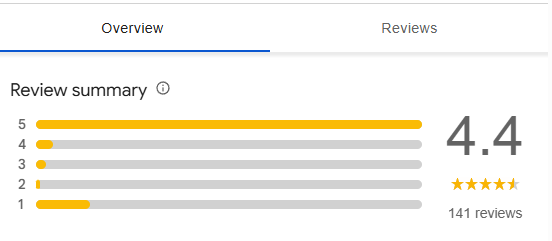 Review volume alone doesn't guarantee rankings — but it significantly impacts whether prospects actually enquire.
What reviews do exceptionally well is convert visitors into enquiries. A firm with 150 five-star reviews and considered responses to every review creates a level of confidence that a firm with 10 reviews simply can't match.
The right approach is to treat reviews as a client experience initiative rather than a rankings tactic. Build a systematic process for requesting reviews from satisfied clients. Make it easy by sending a direct link to your GBP review form. Respond to every review promptly and professionally, including the negative ones.
Managing Negative Reviews
Negative reviews happen to every firm eventually.
Don't ignore them and don't get defensive. Respond professionally, acknowledge the feedback, and where appropriate, offer to discuss the matter directly.
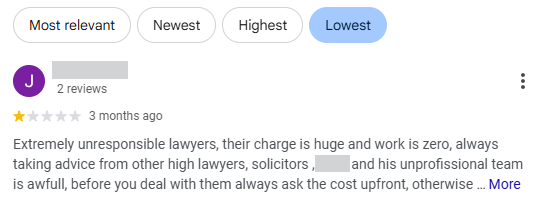 How you respond to negative reviews matters more than the review itself. Prospective clients are watching.
Potential clients reading your reviews are watching how you handle criticism just as much as they're reading the praise.
Key Insight
A single well-handled negative review can actually build more trust than ten generic five-star reviews. It shows potential clients that your firm is professional, responsive, and accountable.
Google Posts: Keeping Your Profile Active
Google Posts allow you to publish updates, news, and announcements directly to your GBP listing. They appear in your profile when someone searches for your firm and can also show up in the local pack.
Most law firms don't use this feature at all, which means the ones that do have an immediate advantage.
Use posts to share:
- Recent case outcomes (where client consent allows)
- Updates to relevant legislation that affects your clients
- Answers to common questions you receive
- Event announcements or community involvement
Keep them concise and write them the same way you'd write a social media post. Short, direct, and useful.
Standard posts expire after a week, so aim to publish at least one or two per month to keep your profile active and current.
Q&A and Messaging: Making It Easy to Contact You
The Q&A section of your GBP is often overlooked, but it serves two purposes. It provides useful information to potential clients, and it signals to Google that your profile is active and engaged.
Proactively populate the Q&A section with questions you commonly receive:
- "What areas do you service?"
- "Do you offer no-win no-fee arrangements?"
- "How long does a personal injury claim typically take?"
Answer these yourself before clients have to ask. It saves them time and shows Google your profile is well-maintained.
The messaging feature allows potential clients to contact you directly through your GBP listing. Enable it and assign someone in your team to monitor and respond promptly.
Response time matters both to Google and to potential clients who are often comparing multiple firms at once.
Fast Fix
Set up automated notifications for new GBP reviews and questions. The faster you respond, the more Google trusts your profile — and the more likely prospects are to choose you over a firm that takes days to reply.
Citations: Building Your Firm's Online Presence
Citations are online mentions of your firm's name, address, and phone number across directories, legal listing sites, and other platforms. They serve as verification signals that your firm exists where you say it does and operates in the areas you claim.
Getting listed on the major directories is the starting point. Legal-specific directories like Law Society listings, FindLaw, and similar platforms carry particular weight for law firms. Beyond those, standard business directories like Yellow Pages, True Local, and industry association listings all contribute.
Where firms gain a real advantage is by getting listed on platforms that require verification. Bing Places, Apple Maps, and similar sites that require active confirmation of your business details send stronger trust signals than directories that accept listings without it. These take more effort to obtain, which is exactly why most firms don't bother.
That effort is worth it.
Every citation needs to use the exact same NAP information as your GBP. Any variation, even minor differences in how your address is written, can dilute the signal these citations send.
Local Links: The Fastest Way to Move Rankings
If you want to understand why some law firms rank in the local pack while others with similar profiles don't, local links are often the answer.
Google doesn't just look at what your website and GBP say about you. It looks at what other websites in your community say about you.
Links from local organisations, community groups, and business associations tell Google that your firm is genuinely embedded in the local area. Some of the highest-value local links for law firms include:
- Local chamber of commerce membership, as most chambers provide a member directory listing with a link to your website
- Sponsorship of community events, sporting clubs, or charity initiatives
- Local business association memberships
- University alumni networks if your principal lawyers are graduates of a local institution
- Local media coverage and community news sites
These aren't just SEO tactics. They're the kind of community presence that builds genuine reputation. The fact that they also happen to be powerful ranking signals is a bonus.
A firm that secures a handful of strong local links from respected organisations in their market will often see rankings shift faster than firms pursuing traditional link-building strategies.
Expert Tip
Don't just chase links for SEO. Sponsor a local junior footy team or join your regional business chamber. These generate the exact type of local authority signals that Google's algorithm rewards — and they build real relationships in your community.
Managing Multiple Locations
For law firms operating across multiple offices, managing separate GBP listings for each location adds complexity but is essential.
Each location needs its own listing with location-specific information. Use a unique local phone number for each office rather than a single national number. This helps Google understand each location as a distinct local business and improves your chances of ranking in local searches specific to each area.
The same attention to NAP accuracy, category selection, and service alignment applies to every location, not just your primary office.
Watch for duplicate listings, particularly for firms that have been operating for a long time or have changed addresses. Duplicate listings can split your authority and undermine your rankings. If you find duplicates, contact Google support to have them removed or merged.
Tracking Your GBP Performance
You can't improve what you don't measure.
GBP provides its own insights dashboard that shows how many people viewed your profile, how they found you (direct search versus discovery), and what actions they took, such as clicking to your website, calling your firm, or requesting directions.
Review these metrics regularly. Look for trends over time rather than obsessing over individual weeks.
If profile views are increasing but calls aren't, that's a signal to look at your listing content and whether it's compelling enough to drive action.
Integrate Google Analytics with your website to track what happens after someone clicks through from your GBP. Understanding the full journey from search to enquiry to client gives you the data you need to keep improving your local marketing strategy.
Key Insight
Regularly analysing GBP insights reveals exactly how clients are finding and interacting with your firm online. If views are up but enquiries are flat, the problem isn't visibility — it's your profile's ability to convert.
Staying Ahead: What to Keep an Eye On
Google updates how it handles local search regularly. Algorithm changes can shift rankings without warning, which is why a set-and-forget approach to your GBP is a risky strategy.
Stay informed by following reputable local SEO resources and monitoring your rankings on a monthly basis.
Ranking tracking tools that show your local visibility across a geographic grid are particularly useful for law firms. They show exactly where in your target area you're visible and where you're not, which makes it much easier to prioritise where to focus your efforts.
When algorithm updates occur, the firms that recover fastest are the ones with the strongest fundamentals. Accurate information, genuine local presence, quality citations, and real community links.
These aren't tactics that go out of fashion. They're what Google has always been trying to measure.
Working With a Specialist
If all of this sounds like a significant investment of time, it is.
The reality is that most law firms don't have the internal resources to manage their GBP, website alignment, citations, and local link-building strategy effectively alongside running a busy practice.
Working with a digital marketing agency that specialises in legal marketing, particularly one that understands the Australian legal market, is worth considering. The right agency won't just set up your profile. They'll build the full ecosystem that Google is looking for: aligned website architecture, consistent citations, local link acquisition, and ongoing monitoring and optimisation.
The firms that treat their Google Business Profile as a serious marketing channel, not an afterthought, consistently outperform those that don't.
In a market where one new client can be worth tens of thousands of dollars in revenue, the investment in getting this right is easy to justify.
Final Thoughts
Your Google Business Profile is not a set-and-forget task. It's a living part of your marketing strategy that requires consistent attention and a clear understanding of how Google's local algorithm works.
Get your GBP and website in alignment. Build genuine local presence through citations and community links. Manage your reviews systematically. Monitor your performance and keep refining.
The firms that do this consistently are the ones that show up when potential clients are searching for exactly what you offer.
If you want to know exactly what's holding your firm back in local search, we're happy to take a look. Book a free strategy session with the PixelRush team and we'll give you a clear picture of where the gaps are and how to close them.
Want us to implement these strategies for you?
Book a free strategy call and let's discuss how we can grow your business.
Book Your Free Call
Written by
Byron Trzeciak
Founder of PixelRush, Byron has spent over a decade mastering digital marketing. His agency has helped 300+ brands grow, managed $10M+ in ad spend, and optimised 400+ landing pages. He shares hard-won strategies so you can skip the learning curve.
Continue Reading
View All →
Why Personal Injury Google Ads Are Getting More Expensive (And What to Do About It)
22 min read
The Lead Response Crisis: Why Your "Bad Leads" Might Actually Be Gold
4 min read