
The SEO pricing conversation has completely changed. What was true three years ago isn't true today, and most of what you'll read on this topic is either outdated or written by someone trying to sell you a package.
So let's cut through it. Here's what SEO actually costs today, what you get at each level, and the questions you should be asking before you spend a single dollar.
Key Takeaways
- AI has made basic content production cheap, which means low-cost SEO packages are now even more worthless than before. You're paying for volume, not results.
- Real SEO, the kind that moves the needle on competitive terms, has never been more expensive or more specialist.
- Price is no longer the best indicator of value. A $4,000/month retainer can be just as ineffective as a $1,000 package if the strategy is wrong.
- You may be able to handle more of your SEO in-house than you think, but only if you're honest about where your knowledge gaps are.
- AI-built websites like those created with Lovable can work for SEO, but only if you know how to work around their limitations.
- Link building is the most expensive and most misunderstood part of SEO. Most agencies are doing it badly.
- Your Google Business Profile might be the single most cost-effective SEO investment you can make right now, and most businesses are ignoring it entirely.
The SEO Landscape Has Shifted. Here's What That Means for You.
SEO today sits in two very different worlds and they have almost nothing to do with each other.
On one side, AI has made basic content production so cheap that almost any digital marketing agency can spin out articles at scale. The cost of producing 10 mediocre blog posts has dropped to near zero. This sounds like a good thing. It isn't.
On the other side, the SEO work that actually drives results, the technical audits, the authoritative link earning, the site architecture, the UX improvements that reduce bounce rates, requires genuinely rare skills. And the people who have those skills charge accordingly.
The gap between the two has never been wider. And that's exactly why so many businesses are wasting money right now.
Key Insight
If your agency can't explain the difference between the SEO work that AI has commoditised and the specialist work that still requires real expertise, they probably don't know the difference either.
The Hard Truth About Package SEO
If you're currently paying an agency for a package that includes two blog posts per month, a couple of backlinks, some citation work, and a monthly report, I'd encourage you to send them a cancellation email today.
Not because of the price. You might be paying $1,000 a month for this or you might be paying $4,000. The price doesn't matter. The problem is that this kind of package will never produce meaningful results, at any price point.
Here's why. Two AI-generated articles per month adds no real authority or depth to your site. Google has seen millions of versions of those articles. Two backlinks a month from a vendor list is not link building, it's the appearance of link building. Local citation work has been table stakes since 2017.
The agencies running these packages aren't necessarily dishonest, they're just selling a product that was already marginal five years ago and is now essentially useless. If this is your current setup, the kindest thing I can tell you is to stop.
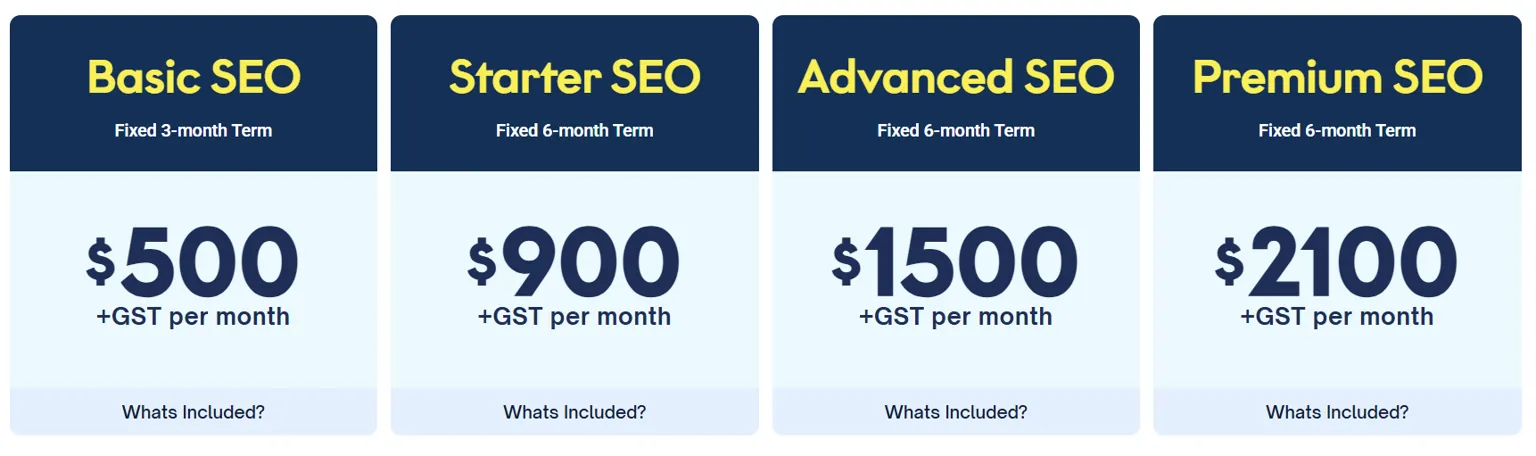 This is what most SEO packages look like. Fixed terms, tiered pricing, and no connection between the deliverables and actual business outcomes. The question isn't how much you're paying, it's what you're actually getting for it.
Pro Tip
Ask your current agency exactly how many hours per month are being spent on your campaign and what specifically those hours are going towards. If they can't answer that clearly, that tells you everything you need to know.
The Rise of Systemised, Niche-Specific SEO Agencies
Here's something worth paying attention to. I spoke recently with an agency that does nothing but SEO for law firms. Not professional services broadly. Not "we work with a few lawyers." Just law firms, exclusively.
And the way he was approaching it was genuinely interesting. Because when you've already produced a thousand articles on personal injury topics, built out proven site structures for law firm pages, and established a link-building system specific to the legal industry, the game changes completely. The ingredients are already prepared. Like walking into Subway, you're not starting from scratch every time. You're making the sub.
The implications of this are significant. Site hierarchy, content frameworks, internal linking structures, schema markup for legal services, all of it can be pre-built and refined over time rather than figured out fresh for every client. What used to take six months to get right on a new engagement can be deployed in weeks. Instead of producing twelve articles over six months, a systemised agency working in a niche they know deeply could potentially deliver hundreds of pieces of content in a fraction of the time, without sacrificing relevance or quality.
This is where AI is actually useful in an SEO context. Not as a replacement for expertise, but as a production multiplier layered on top of it. If the strategic framework is solid and the industry knowledge is real, AI can scale the output dramatically.
There are trade-offs worth understanding before you go looking for one of these:
- Template risk - The more systemised the approach, the greater the risk that your content starts to sound like everyone else in your space who is using the same agency. The best operators will have customisation built into their process, but you need to ask how they ensure differentiation between clients.
- Niche lock-in - You're trusting that their template is actually built on strong foundations. If their site architecture or linking strategy has a flaw baked in, it gets replicated across every client they serve.
- AI content quality - Volume is only an advantage if the content is genuinely useful. A thousand thin articles will do more harm than good. Ask to see examples of published work and check how it performs.
That said, the upside for businesses operating in well-defined verticals is real. A personal injury firm working with an agency that has deep law firm SEO infrastructure behind them is going to move faster and more efficiently than one working with a generalist who is figuring out the industry from scratch.
Don't automatically equate a lower price point with lower quality when the model is systemisation rather than shortcuts. These are very different things. A niche agency running a tight, repeatable system can genuinely offer more value for less money than a generalist charging a premium for strategy they're inventing on the fly. We'll see more of this, not less.
Key Insight
A niche agency with systemised processes can deliver more value at a lower cost than a generalist inventing strategy from scratch. Ask how they differentiate between clients before you sign anything.
Could You Be Doing This Yourself?
This is a question more business owners should be asking honestly, and not just dismissing because it feels like too much work.
Here's the reality. The part of SEO that most agencies are delivering, content production, is actually the part where you as the business owner have the biggest advantage. You have the actual expertise. You've had the client conversations. You've seen the patterns across hundreds of cases or transactions or whatever your business deals in.
Most SEO agencies are publishing content that has zero original insight in it because they don't know your industry. They're using AI to summarise what already exists online. The result is content that Google increasingly doesn't want to surface, because it adds nothing new to the conversation.
If you, or someone in your team, can commit to producing content that contains real perspective and real-world experience, even at a slower pace, that is genuinely worth more than the AI-farmed output most agencies produce. It's like exercise. You either find the time, build it into the week as a habit, or you just don't make progress. There's no shortcut that actually works.
What you will struggle to do yourself, without support, includes:
- Technical SEO - Site speed, crawl errors, indexing issues, Core Web Vitals, canonical tags, structured data (schema), XML sitemaps. This requires both knowledge and access to the right tooling.
- Site architecture - How pages are structured and linked together to pass authority correctly. Most sites get this wrong and it silently kills their rankings.
- Link building - Acquiring high-quality links from relevant, authoritative sites is time-consuming and relationship-dependent. It's not something you can automate or offshore cheaply.
- Keyword and competitive research - Understanding which terms are actually worth targeting versus which ones look appealing but have terrible conversion intent.
The honest answer is that a hybrid approach often makes the most sense. Handle your content in-house where you can bring genuine expertise, and bring in specialists for the technical and link-building components.
Fast Fix
Start with one piece of original content per week based on a real client question you've answered recently. That single habit will outperform most agency content programs.
AI-Built Websites and SEO: What You Need to Know
If you're reading this on the PixelRush site, you should know this site was built using an AI website builder. So I have some skin in this game.
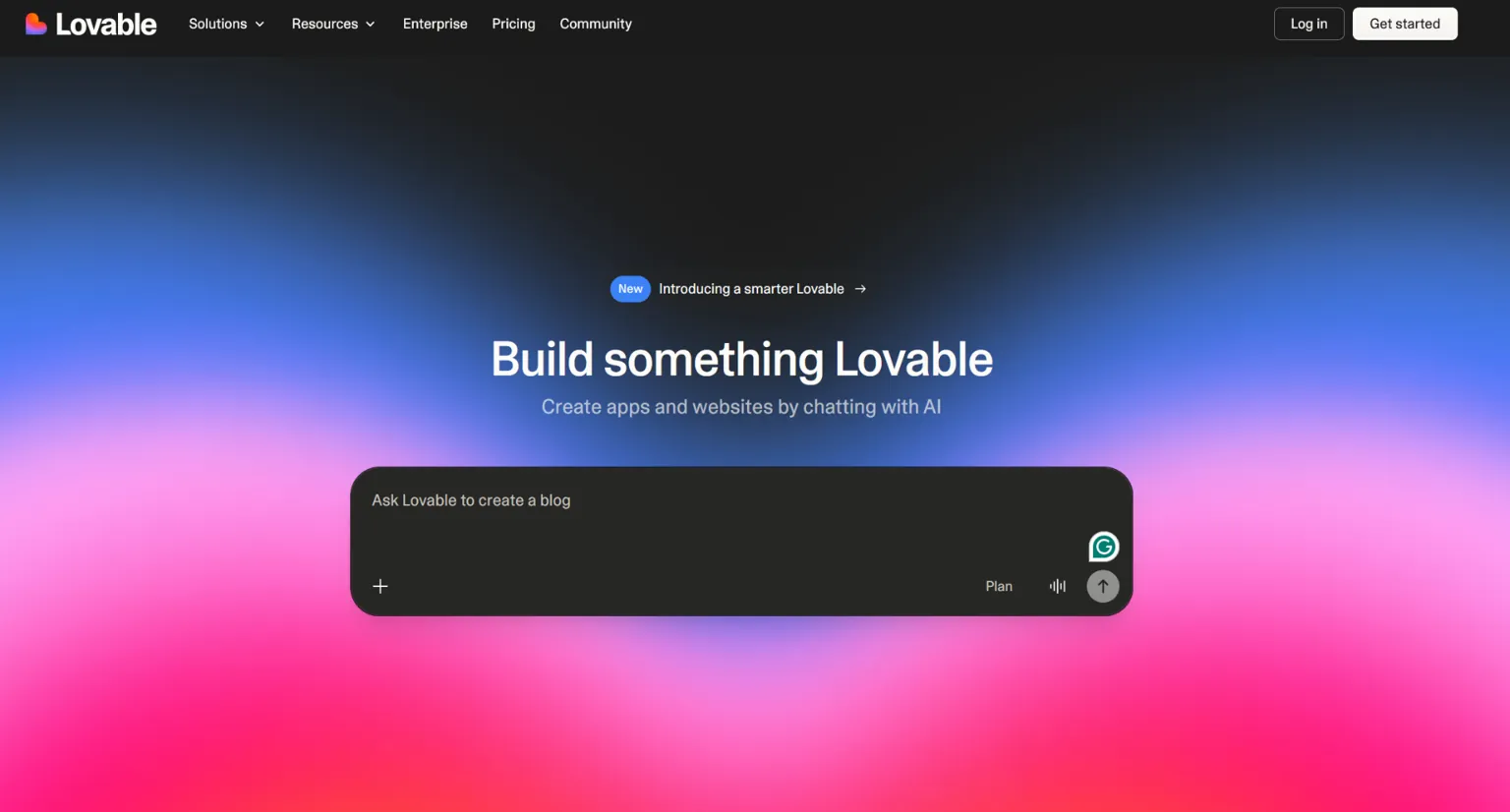 The PixelRush website was built using Lovable, an AI website builder. It works for SEO, but only if you know what you're doing.
Many traditional SEOs will tell you that AI-generated sites like those built on Lovable are bad for SEO. They're not entirely wrong. The legitimate concerns are:
- JavaScript-heavy rendering - Most AI site builders generate content using JavaScript frameworks. Googlebot can crawl JS, but it adds complexity and can slow down indexing, particularly for larger sites.
- Limited native SEO infrastructure - You don't get the same out-of-the-box control over meta structures, canonical tags, and schema markup that a mature CMS like WordPress provides.
- Sitemap and crawl management - Auto-generated sitemaps are often incomplete or improperly structured, which creates crawl inefficiency across the site.
- Page speed - AI-built sites can carry heavier client-side rendering loads that push Core Web Vitals scores in the wrong direction.
- Internal linking control - Building a deliberate internal linking structure, which is one of the most underrated ranking factors, is harder when you don't have full control over the template layer.
That said, if you know what you're doing, these problems are solvable. And the advantages are real. You're no longer dependent on a developer or a plugin ecosystem. Pages can be built and iterated on quickly. Custom functionality that would cost thousands in developer time can be prompted into existence. For businesses that are moving fast and need flexibility, an AI-built site with someone competent managing the SEO layer is a legitimate setup. Without that knowledge layer though, you're building on shaky ground.
If you want to understand what a website actually costs to build, whether AI-built or traditional, we break that down in detail.
Expert Tip
If you're building on an AI platform, invest in a custom prerendering solution and manual sitemap management. These two things solve the majority of SEO limitations with JavaScript-heavy sites.
Google Business Profile: The Most Cost-Effective SEO You're Probably Ignoring
If there's one area of SEO that most businesses are sleeping on, it's their Google Business Profile (formerly Google My Business).
Here's why this matters so much. When someone searches for a service in their area, Google shows the local pack, a map with three results, above the organic search results. If your business isn't in those three spots, most searchers will never see you.
The best part? Optimising your Google Business Profile is one of the most cost-effective things you can do in SEO right now. It doesn't require expensive content production. It doesn't require a link building campaign. It requires attention, consistency, and the willingness to actually do the work.
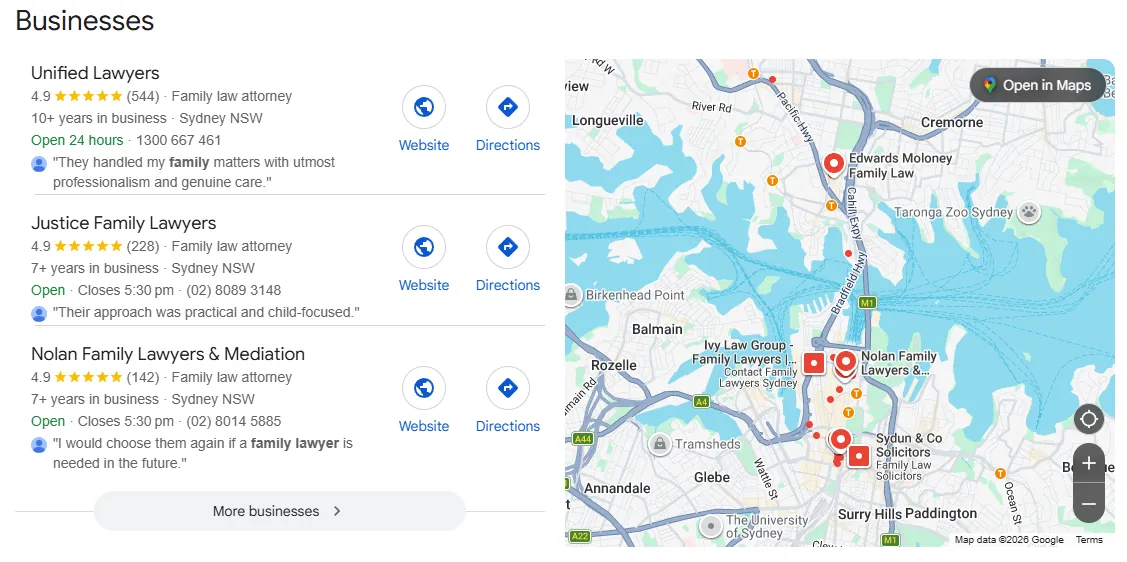 The local pack dominates above organic results. If your business isn't in these three spots, most searchers will never see you.
What makes GBP so impactful:
- Reviews are a conversion machine. A business with 150 genuine reviews and thoughtful responses to every single one creates a level of trust that no amount of ad spend can replicate. Build a systematic process for requesting reviews from happy clients. Make it easy, send them a direct link. And respond to every review, including the negative ones. How you handle criticism tells potential clients everything they need to know about how you'll treat them.
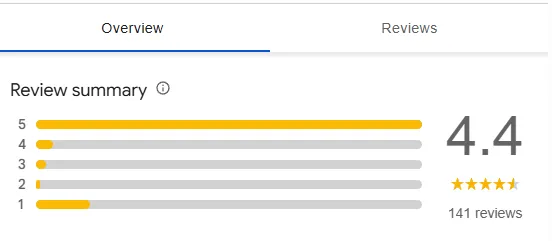 Review volume alone doesn't guarantee rankings, but it significantly impacts whether prospects actually enquire.
-
Profile and website alignment is critical. Google's local algorithm cross-references what your GBP says you do with what your website says you do. When they match perfectly, Google gains confidence that your business is legitimate. When they don't match, your rankings suffer. Every service listed on your GBP needs a corresponding page on your website.
-
Consistent NAP information. Your business name, address, and phone number need to be identical everywhere they appear online, your GBP, your website, directories, and any other platform where your business is listed. Inconsistencies confuse Google and erode trust signals.
-
Regular updates and posts. Google rewards active profiles. Post updates, add new photos, respond to questions. Treat your GBP like the digital storefront it actually is, not a directory listing you set up once and forget about.
-
Local links accelerate results. Links from chambers of commerce, local sponsorships, community organisations, and industry associations can move your local rankings faster than almost anything else. These are often free or low-cost, and most businesses never pursue them.
Key Insight
If you're spending thousands a month on SEO but haven't properly optimised your Google Business Profile, you're building on a shaky foundation. Start here. The ROI per hour invested is unmatched.
What Good SEO Actually Costs Right Now
Hourly rates for experienced SEO practitioners haven't moved much on the low end, but the ceiling has gone up significantly for specialists. Here's an honest breakdown of what different budget levels will get you in the Australian market.
Under $1,500/month
You're either getting a package that won't move the needle, a junior freelancer learning on your budget, or heavily templated work with no strategic thinking behind it. There are exceptions, but they're rare. At this price point, you're usually better off investing time into doing it yourself.
$1,500 to $3,500/month
This is where you can start finding capable generalist SEO operators who can handle strategy, technical work, and content oversight. You won't get deep specialist resourcing at this level, but a strong individual or small team can make real progress for small to mid-sized businesses with realistic timelines.
$3,500 to $7,000/month
You're starting to work with agencies that have actual teams. At this level, you should expect dedicated resources for technical SEO, content, and reporting. Ask specifically who is working on your account and what their background is. The difference between a good and bad agency at this price point is significant.
$7,000 to $15,000/month
This is where you start working with genuine specialists, not generalists wearing multiple hats. At this level, you should have a dedicated strategist, a technical SEO analyst, a content team, and either in-house or contracted link builders doing real digital PR. You're getting proper site architecture work, conversion rate optimisation, and competitive intelligence that actually informs strategy rather than sitting in a report no one reads.
This is the budget level where agencies can afford to assign senior people to your account rather than cycling juniors through. The difference is significant. If you're in a competitive vertical like law, finance, or medical, this is realistically the minimum spend that will let you compete for high-value terms at a national level.
$15,000+/month
Enterprise-level SEO. You're working with dedicated specialists across every discipline: technical analysts running crawl audits weekly, content strategists producing original research and thought leadership, digital PR teams securing placements in major publications, and link builders with genuine media relationships. At this level, expect bespoke reporting tied directly to revenue attribution, not vanity metrics.
Businesses spending at this level typically have organic search as a primary revenue channel. Think national law firms competing across multiple practice areas, large e-commerce operations, SaaS companies, or multi-location service businesses. If you're spending $15K+ and not seeing results within 6 months, the problem is almost certainly strategic direction or attribution, not effort or resource.
Fast Fix
Match your budget to your ambition. If you want to rank nationally for competitive terms, don't expect a $1,500/month budget to get you there.
Link Building: The Most Expensive Part, and the Most Misunderstood
Most agencies offering SEO under $3,000 per month are getting links from heavily farmed sites. They'll either have a vendor they buy links from, or they're running offshore outreach that produces placements on sites that Google either ignores or penalises.
The links themselves might look fine on the surface. Real URLs, real content around them. But if those sites exist primarily to sell links, Google knows. The value is near zero, sometimes negative.
Genuinely effective link building looks like this:
- Digital PR - Getting your business, data, or perspective featured in real publications that link back to your site as a byproduct.
- Local sponsorships and partnerships - Supporting events, industry groups, or local organisations in exchange for a real, contextual link.
- Content that earns links naturally - Studies, tools, original data, or genuinely useful resources that other sites want to reference. This is increasingly rare and increasingly valuable.
- Direct outreach with real relationship-building - Not spray-and-pray email campaigns but targeted, personalised outreach to relevant sites with something worth linking to.
To give you a sense of the real cost, we once secured a single link on Forbes Australia for a client. The invoice? $4,208.67 AUD including GST. That's one link. On one site. And it was worth every cent because of the domain authority, the referral traffic, and the trust signal it sends to Google.
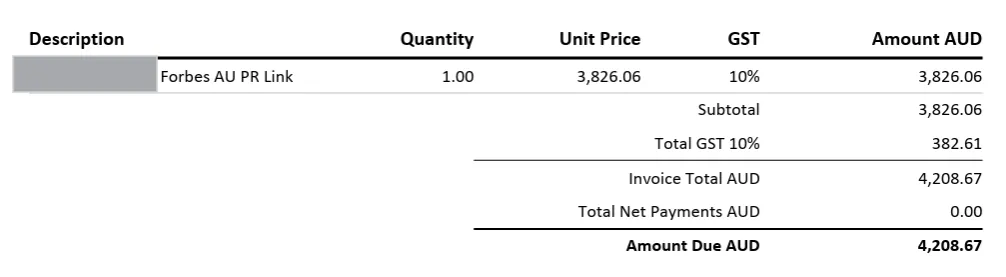 The actual invoice for a single Forbes link placement. This is what genuine, high-authority link acquisition costs.
This is what genuine, high-authority link acquisition actually costs. If an agency is claiming to deliver quality links as part of a $1,500/month retainer, ask yourself where those links are really coming from.
Link building specialists like linkbuilder.io price their services from around $3,000 USD per month at the entry level up to $20,000 USD or more for serious campaigns. That's just the link building, separate from everything else.
If an agency is charging you $1,500/month all-in and claiming to deliver links as part of that, be very clear-eyed about what those links actually are.
Expert Tip
Ask any agency offering link building to show you the actual URLs where your links will be placed. If they can't or won't, that's your answer.
The Honest Framework: How to Think About SEO Spend
Stop thinking about SEO as a monthly line item and start thinking about it as a business investment with a specific objective.
Before you spend anything, answer these questions:
- What specific terms do I want to rank for, and what is the commercial value of ranking for them?
- What does my site look like technically right now, and what needs to be fixed before content or links will have an impact?
- Am I in a position to produce genuinely useful content, or am I going to outsource that to someone who knows nothing about my industry?
- Is my goal local visibility, national ranking, or competing in a specific niche?
Your answers will define what you actually need to spend and where. Businesses that approach SEO this way tend to get results. Businesses that sign monthly retainers and wait tend to get invoices.
You can also explore our case studies to see real examples of how SEO and paid channels work together to drive measurable revenue.
If you want to talk through what that looks like specifically for your situation, book a free strategy session with us. No templates, no packages, just a direct conversation about what's working, what isn't, and what it would take to change it.
If you want to understand how we approach the full picture, not just SEO but Google Ads, creative, and tracking working together, take a look at our growth system.
Quick Win
Before your next agency meeting, write down the three terms you most want to rank for and the estimated revenue each would bring per month if you were in position one. That single exercise will reframe the entire conversation.
Frequently Asked Questions
How much should I budget for SEO in Australia?
For most small to mid-sized businesses, expect to invest between $1,500 and $7,000 per month for SEO that actually moves the needle. Anything under $1,500/month is unlikely to produce meaningful results. Enterprise-level campaigns for competitive national terms typically start at $7,000+/month. The right budget depends on your goals, competition level, and timeline.
Is cheap SEO worth the risk?
No. SEO services under $500/month almost always involve shortcuts, outsourced overseas work, black hat link building, or AI-generated content with no strategic thinking. The consequences can include Google penalties, lost rankings, and in severe cases, having to abandon your domain entirely. The cost of recovering from bad SEO almost always exceeds what you would have spent doing it properly.
What's the most expensive part of SEO?
Link building. Quality link acquisition from authoritative, relevant websites is the most expensive and most misunderstood component of SEO. A single high-authority link from a publication like Forbes can cost over $4,000 AUD. Specialist link building agencies charge from $3,000 USD/month at entry level. If an agency claims to include quality link building in a $1,500/month all-in package, those links are almost certainly from low-quality, farmed sites.
Can I do SEO myself?
Partially. Content production is actually the area where business owners have the biggest advantage, because you have genuine industry expertise that most agencies lack. However, technical SEO, site architecture, link building, and competitive keyword research require specialist skills and tooling. A hybrid approach, handling content in-house and bringing in specialists for the technical components, often makes the most sense.
Are AI-built websites bad for SEO?
Not necessarily, but they come with challenges. JavaScript-heavy rendering, limited native SEO controls, and sitemap management issues are real concerns. However, these are solvable if you know what you're doing. The PixelRush site itself was built using an AI website builder, so it's proof the approach can work with the right SEO knowledge layered on top.
How long does SEO take to show results?
It depends on your starting point, competition, and investment level. Most businesses should expect 3-6 months before seeing meaningful movement, with significant results typically appearing at the 6-12 month mark. Trying to rush results with a small budget is one of the most common mistakes businesses make. Is SEO worth it? When done properly, the compound returns over time make it one of the best long-term investments you can make.
Should I optimise my Google Business Profile before investing in broader SEO?
Absolutely. Your Google Business Profile is free to set up and one of the highest-ROI activities in local SEO. Get your profile fully optimised, aligned with your website, and actively managed with reviews before you start spending on broader SEO campaigns. For many local businesses, a well-optimised GBP alone can generate a significant volume of enquiries.
Want us to implement these strategies for you?
Book a free strategy call and let's discuss how we can grow your business.
Book Your Free Call
Written by
Byron Trzeciak
Founder of PixelRush, Byron has spent over a decade mastering digital marketing. His agency has helped 300+ brands grow, managed $10M+ in ad spend, and optimised 400+ landing pages. He shares hard-won strategies so you can skip the learning curve.
Continue Reading
More on SEO
AI Content Strategy: What Actually Works Now (And Why We Dropped SEO)
We stopped selling SEO and built an AI content strategy instead. The system, the pipeline, the internal linking, the authority, and the real results.
Can Personal Injury Lawyers Advertise in Queensland? PIPA and What It Really Means for Your Marketing
What PIPA actually allows for personal injury advertising in Queensland: the methods, the content limits, why Google Ads and SEO are fine but images and claims aren't, and where lawyers disagree.
Referrals vs Marketing Systems: Why Most Accountants Are Building The Wrong Practice
Referrals prove you do good work, but they quietly build the wrong practice. Here's how accountants use a marketing system to grow by design, not by accident.
Accounting Firm Marketing Budget: What Actually Works in Australia
The old rule of "spend 5-10% of revenue on marketing" doesn't work for accounting firms. You're not a widget manufacturer with predictable monthly sales cycles. Your revenue spikes during tax season, drops in summer, and depends heavily on client retention rates that most firms c...