
Most law firms are producing content that nobody reads. Either they've handed it off to an SEO agency churning out generic articles written by someone who's never set foot in a courtroom, or their lawyers write for other lawyers rather than for the stressed-out person Googling for help at 11pm.
The result is the same either way: content that doesn't rank, doesn't convert, and doesn't build the kind of trust that turns a reader into a client.
This guide covers everything your firm needs to fix that, from choosing the right topics and doing proper keyword research, to building an AI-powered production system that gets expert content out of your lawyers' heads and onto the page at scale.
Key Takeaways
- Most law firm content fails at the topic selection stage, before a single word is written. Write about what clients search for, not what lawyers find interesting.
- Keyword research doesn't need to be complicated. A simple five-step process using widely available tools is enough to identify high-opportunity topics and track your progress over time.
- Evergreen content that covers the legal process, not recent case law, will bring traffic for years rather than weeks.
- Your lawyers are your best content asset. Wispr Flow lets them speak their answers instead of typing, dramatically reducing the time investment and producing more natural, useful content.
- A Claude project set up with the right guidelines turns raw lawyer input into polished, SEO-optimised articles consistently.
- A firm of five or more lawyers can realistically produce five to ten publishable articles per week. All you need is one person to quality-check before publishing.
- Without proper tracking, a content calendar, and a clear production process, even great articles get forgotten. Systems matter as much as quality.
The Real Reason Law Firm Content Fails
The obvious culprit is bad writing. But that's rarely the actual problem.
Most law firm content fails before a single word is written, because the topic was chosen for the wrong reasons. It gets picked because a partner found it interesting, or because the agency pitched a content calendar built around trending legal news, or because someone thought a deep dive into a recent High Court decision would demonstrate expertise.
None of that is what clients are searching for.
A personal injury lawyer might want to write a detailed breakdown of how contributory negligence is assessed under the Civil Liability Act. Useful information. But their potential clients are typing "can I still make a claim if the accident was partly my fault." They don't know what contributory negligence is. You have to meet them at their question, answer it clearly, and bring in the legal framework as the substance behind the answer.
The second common failure is writing for lawyers rather than clients. When a lawyer writes, they naturally gravitate toward the parts of the law they find nuanced or interesting, often treating the fundamentals as too obvious to explain. But your clients need the fundamentals. They need plain English. They need to understand what happens at each stage of the process, what it will cost them, and what their realistic chances look like.
Get the topic selection and the audience orientation right, and everything else becomes much easier.
Pro Tip
Think about the questions your intake team hears most often. Those are your starting keywords, and your best article topics.
Part 1: Choosing Topics That Actually Rank
Write About What the Law Is, Not How It Changed
Law firms default to writing about legal developments: new judgements, legislative amendments, changes in court procedure. This makes sense if you're writing for an audience of lawyers who track changes in the field. It's the wrong move if you're trying to attract new clients through search.
Here's why. Someone who has just been injured in a car accident is not searching "Motor Accidents Injuries Act 2019 amendments." They're searching "can I make a claim if the accident was partly my fault." They don't care that the law changed. They need to understand what the law is and what it means for their situation.
Instead of writing about a new judgement, identify who that development affects and what process it relates to. Then write for that person and address that process directly. The legal development can be referenced in the body of the article, but it shouldn't be your hook or your title.
A time-sensitive article about a recent case might spike for a week. An article answering a question clients have been asking for twenty years will bring in traffic for as long as your firm exists.
Don't Write About What Interests Lawyers
This is the subtler version of the same problem. Lawyers tend to take the fundamentals for granted and focus on the parts of the law they find intellectually challenging.
An employment lawyer might write a thorough analysis of the Fair Work Commission's approach to procedural fairness in recent unfair dismissal cases. That's genuinely interesting to a lawyer. But the person who just got let go from their job is searching "can I contest my dismissal" or "what do I do if I was fired unfairly." They need the fundamentals explained clearly before they need the case law. Start where the client is, cover what they need to understand, and let the depth of your knowledge come through in the quality of the explanation rather than the sophistication of the topic.
Be Specific About Who the Article Is For
Vague titles don't rank and they don't convert. A page titled "Workers Compensation NSW" is a category, not an answer. "What to Do If Your Workers Comp Claim Gets Rejected in NSW" is a question someone is genuinely asking. "Property Settlement" is a topic. "How Is Property Divided After Separation If One Partner Owns a Business" is what a specific, valuable type of client types into Google at midnight.
The more precisely you can define who the article is for and what problem it solves, the more likely the right reader is to click on it, stay on it, and pick up the phone.
Quick Win
Audit your existing blog titles. If any of them could be the name of a Wikipedia article, they're too broad. Rewrite them as specific client questions.
Avoid Legal Jargon in Titles
Your title needs to match the words your clients actually use, not the words you use internally.
"Subrogation rights" means nothing to someone whose car just got written off by an uninsured driver. "Can I Still Get Compensated If the Other Driver Wasn't Insured" is exactly what they're searching. "Intestacy provisions" is a term used in letters of administration, not in the search bar of someone who just found out their parent died without a will.
There are exceptions. Terms like "defamation," "negligence," "power of attorney," and "unfair dismissal" have entered everyday language and people do search for them. But test that assumption with keyword research rather than guessing. You might find the volume sits entirely with the plain English version.
Avoid Case Names, Cute Titles, and Clever Headlines
Case names and legislation titles belong in legal submissions, not blog post headlines. Your title needs to do one thing: make it immediately obvious what the article covers and who it's written for.
The same goes for trying to be clever. A punchy, creative headline might work well in a newsletter to existing clients who already know and trust your firm. For someone who has never heard of you and is scanning a Google results page, clever becomes confusing. "Navigating the Complexities of Modern Tenancy Arrangements" tells the reader almost nothing. "What Are Your Rights as a Tenant If Your Landlord Sells the Property" tells them exactly why they should click.
Get the Niche Level Right
Write too broadly and you're competing against every major legal information site in the country. Write too narrowly and there's nobody searching for it.
A competitive topic like "divorce lawyer" will require a very long, very thorough article to have any chance of ranking, and it may take years. A more specific topic like "divorce process for couples with business assets in Queensland" has far less competition and is immediately relevant to a specific, valuable type of client.
The right level of specificity depends on your market, your firm's size, and your content ambitions. As a general rule, start narrow and build outward. It's easier to rank for a specific topic and then expand it than to compete.
Part 2: Keyword Research for Law Firms
You don't need to be an SEO expert to do keyword research. You just need a process and the right tools.
The goal is simple: identify the specific words and phrases your potential clients are typing into Google, understand how many people are searching for them, and assess how difficult it would be to rank for each one. From there, you prioritise and build your content around those opportunities.
Step 1: Choose Your Keyword Research Tool
Several solid tools are available at different price points:
- Ahrefs and SEMrush are the industry standards. Comprehensive, accurate, and built for professional use. Both require a paid subscription.
- Moz Keyword Explorer is a strong alternative with a similar feature set.
- Mangools KWFinder is a more affordable option that covers the basics well and is easier to learn.
Any of these will give you what you need. Don't get stuck on tool selection. Pick one and start.
Step 2: Start With How Your Clients Think, Not How Lawyers Think
Type in the phrases your potential clients would use. Not the legal term, the plain English version.
A family lawyer might start with "child custody," "property settlement after separation," or "how much does a divorce cost." A personal injury firm might start with "car accident claim," "workers comp rejected," or "can I sue my employer."
Think about the questions your intake team hears most often. Those are your starting keywords.
Step 3: Evaluate Traffic Potential and Keyword Difficulty
For each keyword, you'll see two critical numbers:
- Search volume: how many people are searching for this term per month.
- Keyword difficulty (KD): how hard it is to rank for this term, typically scored from 0 to 100.
A high-volume term with high difficulty (like "personal injury lawyer") is almost impossible to rank for as a new entrant. A moderate-volume term with low difficulty is where the opportunity is. Prioritise these early. You'll build domain authority over time, which will then allow you to compete for harder terms.
Key Insight
A keyword with 200 monthly searches and low difficulty will generate more traffic than a keyword with 10,000 searches that you can't rank for. Focus on winnable terms first.
Step 4: Find Secondary Keywords Using Questions
Once you've identified a primary keyword, look for the questions people are asking around it. Most tools have a "Questions" feature that shows you exactly this.
For "workers compensation claim" you might find: "how long does a workers compensation claim take," "what evidence do I need for a workers comp claim," "can my employer fire me while I'm on workers comp." Each of these is either a subheading opportunity within your article or a standalone article of its own.
These question-based searches are also where you win featured snippets, the box at the top of Google results that pulls a direct answer. Structure your content to answer these questions clearly and concisely, and you'll start capturing position zero.
Step 5: Track Your Progress
Keep a running spreadsheet of your target keywords and the articles you've written to address them. Track your rankings over time. This does two things: it shows you what's working so you can do more of it, and it shows you what isn't working so you can update and improve those articles.
Content without tracking is guesswork. Your keyword spreadsheet is the feedback loop that turns a content library into a growth asset.
Part 3: What Makes Legal Content Actually Work
Answer the Client's Question First, Then Demonstrate Expertise
The best legal content does both. It answers the question clearly, it explains what the process looks like, and it demonstrates that your firm knows what it's talking about.
The mistake most firms make is prioritising either the expertise signal or the accessibility, but not both. An article that's technically accurate but impenetrable to a non-lawyer doesn't help anyone. An article that's easy to read but light on actual legal substance doesn't build trust.
Aim for what your best senior associate would say if a potential client called them directly. Clear, accurate, specific, and structured around what the client actually needs to know.
Build for Readers at Different Stages
Not everyone who lands on your content is ready to call. Some are in early research mode. Some have just experienced the legal problem and are trying to understand it. Some are actively comparing lawyers and ready to engage.
Your content strategy needs to account for all three:
- Early stage content covers the basics: what is this area of law, what situations does it apply to, what are the general outcomes.
- Middle stage content gets more specific: how does the process work, what are the timelines, what does it cost, what are the risks.
- Late stage content addresses the decision: how to choose a lawyer, what to look for, what questions to ask, how to get started.
A lead capture mechanism, whether that's a free guide, a checklist, or an email sequence, lets you stay in contact with the early and middle stage readers until they're ready to engage. Most law firm websites have no mechanism for this at all, which means they're doing all the content work but capturing only the readers who happen to be ready right now.
Pro Tip
Map your existing content to these three stages. Most firms have plenty of early stage content but almost nothing for middle and late stage readers. That gap is where your highest-intent prospects are falling through.
Prioritise User Experience Alongside Content Quality
The best article in the world doesn't rank if the page behind it provides a poor experience. Google measures more than the content itself. It measures what happens after someone clicks.
If your page loads slowly, your bounce rate will be high, and that signals to Google that your content didn't deliver what the searcher was looking for. If your site isn't mobile optimised, you're invisible to the majority of searchers. If the page is hard to navigate or the CTA is buried, readers leave without converting.
Before you build out a content library, make sure the foundations are solid:
- Page load speed on mobile (aim for under three seconds)
- Mobile responsive design
- Clear calls to action on every page, not buried at the bottom
- Simple navigation that helps readers find related content
- No broken internal or external links
Fast Fix
Run your blog through Google PageSpeed Insights. If your mobile score is below 70, fix that before publishing another article. Speed is a ranking factor that affects every page on your site.
Length and SEO Fundamentals
Research consistently points to 2,000 to 2,500 words as the sweet spot for competitive legal content topics. That's long enough to cover a topic comprehensively, but not so long that you're padding.
Beyond length, the core SEO fundamentals every article needs:
- Primary keyword in the H1 title and within the first 150 words
- Primary keyword in at least one H2 subheading
- Question-based H2 and H3 headings wherever natural
- Meta title under 60 characters and meta description under 160 characters
- Internal links to related articles on your site
- Regular updates as the law or your firm's perspective evolves
Part 4: The AI-Powered Content System for Law Firms
Here's the practical reality. Your lawyers already have everything Google wants: genuine expertise, real client experience, and authentic answers to the questions people are searching for. The barrier has never been knowledge. It's been converting that knowledge into published content at any kind of scale.
The system below solves that.
Wispr Flow: Getting Expertise Out of Your Lawyers Without Asking Them to Write
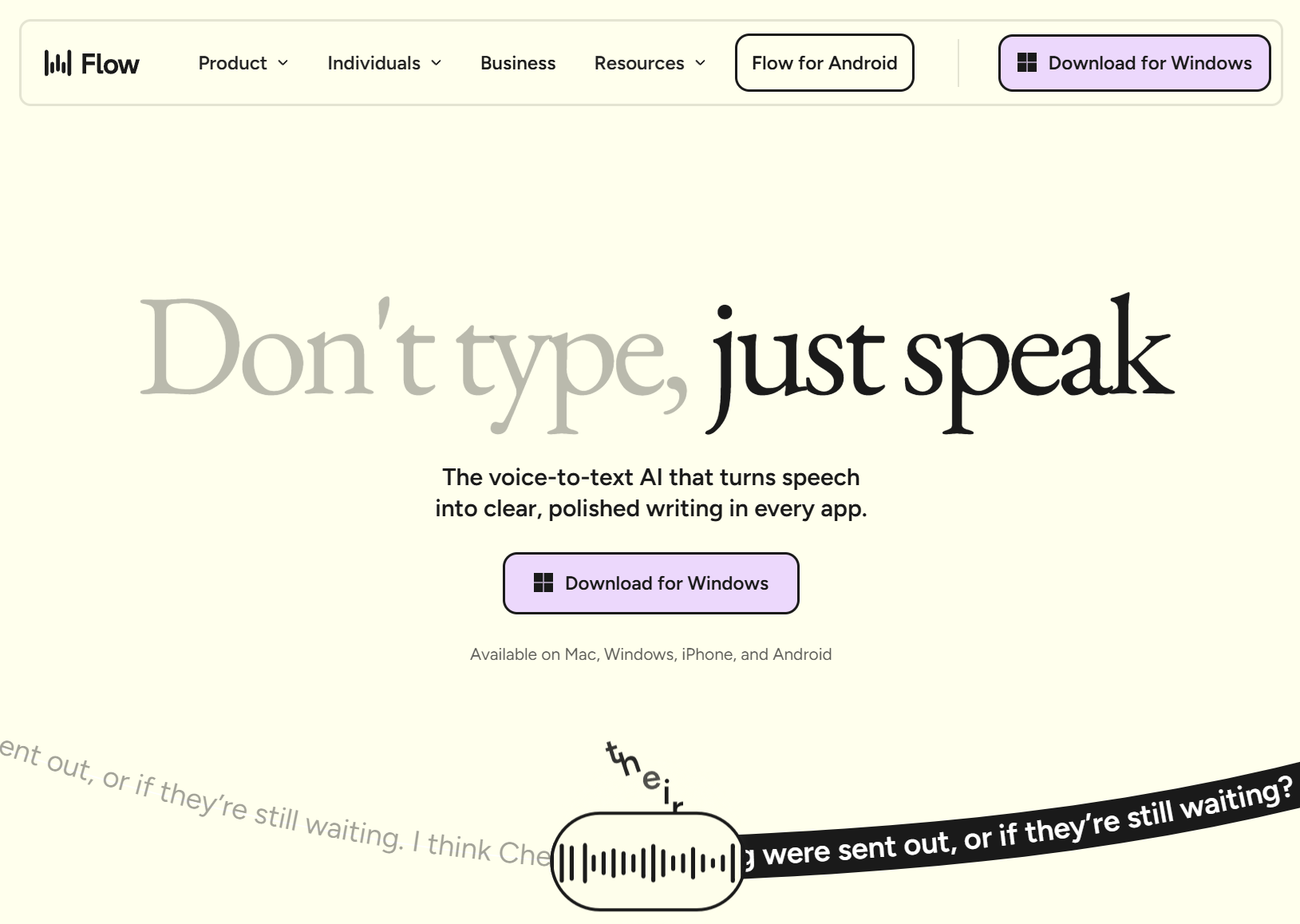
Wispr Flow (wisprflow.ai) is a voice dictation tool that works across your entire computer. You speak, it transcribes, accurately and quickly, anywhere you can type.
A lawyer who would spend two hours drafting 800 words can speak those same 800 words in under fifteen minutes. And the spoken version is often better, because people explain things more naturally out loud. The jargon drops away. Real examples come through. The human insight that no external content writer can replicate surfaces naturally.
The workflow is straightforward. Before each session, someone prepares six to ten questions on a specific topic. The questions are framed the way a client would ask them, not the way a lawyer would frame them. The lawyer finds a quiet space, opens Wispr Flow, and talks through each question.
For topics with genuine complexity, or where different lawyers on your team have different experience, run a group session with two or three lawyers. The back-and-forth naturally produces a more complete, well-rounded piece than any solo recording, and disagreements between lawyers often surface the nuance that makes an article genuinely useful rather than generically accurate.
The transcript goes into Claude. That's where it gets built into an article.
Quick Win
Start with your intake team's top ten FAQs. Have one lawyer record answers via Wispr Flow. You'll have enough raw material for five or more articles in a single 30-minute session.
Setting Up Claude as Your Content Engine
Claude with no instructions produces generic output. Claude with a well-structured project brief and clear guidelines produces consistent, on-brand, SEO-ready articles. The difference is entirely in the setup.
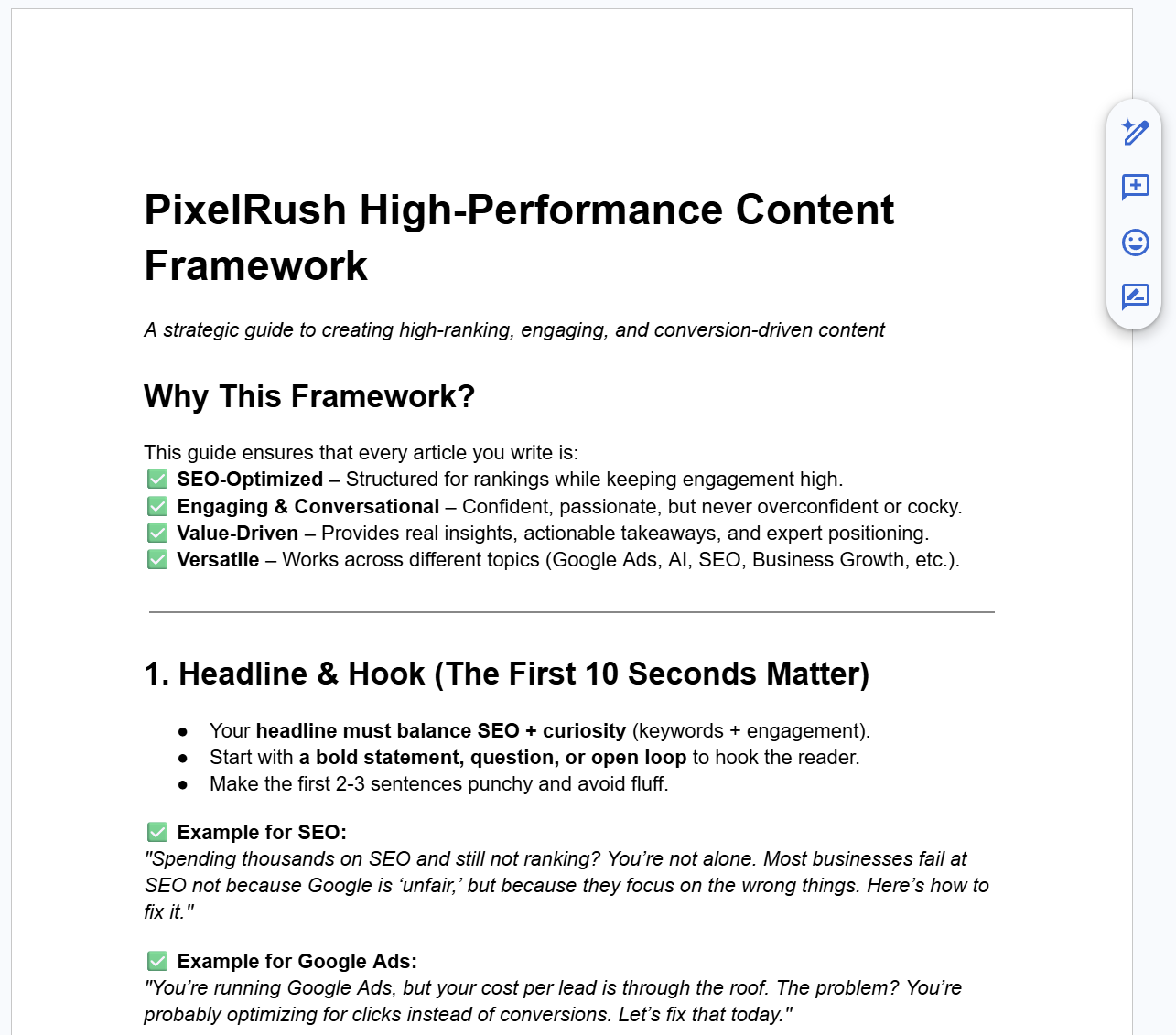
When you create a project in Claude for your law firm's content, include the following:
- Voice and tone guidelines. Write in plain Australian English. Keep paragraphs to two or three sentences. Use contractions. Write as if explaining to a smart person who needs answers, not a law student who needs to pass an exam. Be direct. Avoid hedging every sentence. Use "you" throughout to keep it personal.
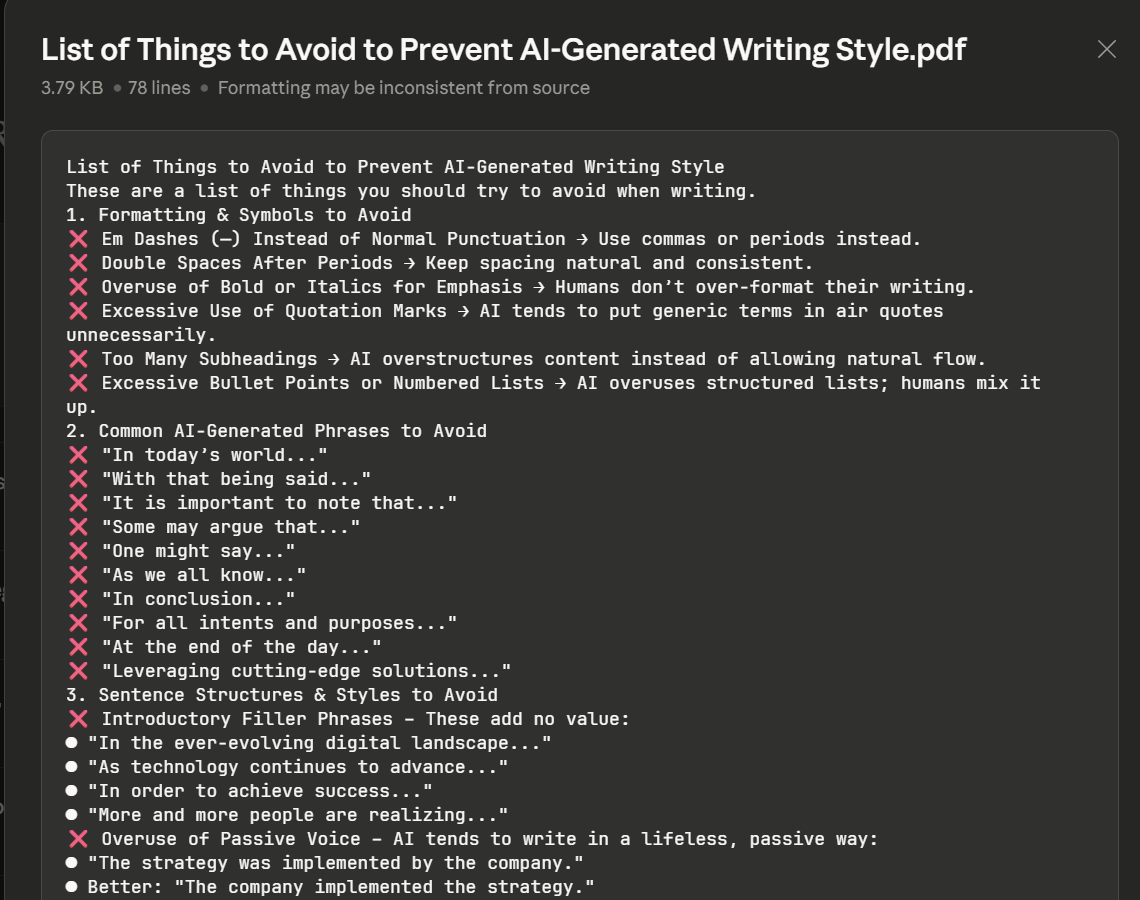
- Phrases and habits to avoid. Corporate buzzwords like "holistic approach" or "client-centric solutions." AI-flavoured openers like "In today's world" or "It is important to note that." Excessive use of bold and italics. Closing summaries that just repeat everything already said. Passive voice where active voice is cleaner.
- Article structure. Every article should open with a hook that names the specific problem the reader is facing. Key takeaways come early, so readers can assess value before committing to the full piece. H2 and H3 headings should be descriptive and question-based where relevant. Each section balances prose with bullet points. The article closes with a clear call to action.
SEO instructions. Primary keyword in the title, first paragraph, and at least one subheading. Question-based headings for featured snippet opportunities. Target 2,000 to 2,500 words for competitive topics. Generate a meta description of 150 to 160 characters at the end of each draft.
Legal accuracy parameters. You can instruct Claude to flag any jurisdiction-specific claims that need verification before publishing, to frame outcomes as typical rather than guaranteed where appropriate, and to reference the relevant legislation accurately. You can also upload PDFs directly into your Claude project: practice notes, legislative summaries, your own firm's guides to specific areas of law. Claude will reference these and stay consistent with them across every article it produces.
Key Insight
The quality of Claude's output is directly proportional to the quality of your project brief. Spend an hour getting the guidelines right, and every article after that will be dramatically better.
The Weekly Production Cycle
Once the system is set up, the production cycle runs like this.
Topic selection happens weekly, guided by your keyword research and the questions your intake team hears most often. Someone prepares the question list for each topic. The relevant lawyer records a Wispr Flow session, typically 10 to 15 minutes. The transcript goes into Claude along with the topic brief. Claude produces a structured draft. One person, whether that's a marketing coordinator or a senior lawyer, reviews for accuracy and approves. The article goes to your web team with the target keyword, meta description, and internal linking suggestions.
For a team of five or more lawyers contributing one session each per week, that's five to ten articles every week. In a year, that's a content library that most competitors won't be able to touch, built on genuine expertise rather than outsourced filler.
The review stage is not optional. AI doesn't always get facts right, and for legal content where accuracy directly affects trust and professional reputation, a second pair of eyes from someone who knows the law is the one step you cannot skip. If articles need heavy rewriting at review stage, the problem is earlier in the process: either the lawyer recording didn't give enough to work with, or the Claude project guidelines need tightening.
Building a Content Culture Inside Your Firm
The firms that make this work consistently don't treat content as a marketing department responsibility that lawyers contribute to occasionally. They build a culture where content creation is understood as part of business development, just as client referrals and networking are.
A few things that accelerate this:
- Designate a content champion. This is the person who manages the process end to end: organising recording sessions, managing the Claude production queue, coordinating review, liaising with the web team. It's a part-time role, not a full hire, but it needs to be someone's clear responsibility.
- Make it easy for lawyers to contribute. The more friction there is, the less it happens. Wispr Flow removes the biggest friction point, which is typing. Prepared question lists remove the second biggest, which is deciding what to say. If a lawyer can walk into a room, speak for fifteen minutes, and walk out knowing they've contributed a full article, they'll do it. If they have to draft, edit, and format it themselves, they won't.
For larger firms, consider creating team-based targets and tracking contribution publicly. Not in a punitive way, but in the way a business development scoreboard works. When lawyers can see their articles generating page views, ranking for competitive terms, and occasionally generating direct enquiries, it shifts content from a chore to something that feels worth doing.
Part 5: The Content Calendar and Production System
Content without a system is just occasional effort. Good weeks followed by nothing. Articles that get published but never promoted. Topics that overlap or get repeated. Keyword opportunities that nobody notices.
A content calendar fixes this.
Your calendar should map out topics by week and month, aligned to your keyword targets and your firm's peak enquiry seasons. Personal injury firms should front-load content in the lead-up to periods when claim volumes rise. Family law firms often see increased search activity in January after the Christmas holiday period. Estate planning firms see a spike around end-of-financial-year when people are reviewing their finances.
The production process behind your calendar should be documented and consistent. A strong process for each article looks like this:
- Keyword research and topic selection
- Brief preparation (target keyword, secondary keywords, question list for the lawyer recording, target word count, call to action)
- Lawyer recording session via Wispr Flow
- Claude draft generation using the project guidelines
- Review and approval by designated quality checker
- On-page SEO setup (meta title, meta description, internal links, image alt text)
- Publication and indexing
- Performance tracking in your keyword spreadsheet
Establishing this process once and running every article through it is what separates a content library that grows your rankings from a blog that exists but doesn't do much.
Takeaway
A content system beats content talent every time. The firms producing consistently are the ones with a documented process, not the ones with the best writers.
Putting It Together
Start with one practice area. Identify three to five topics your potential clients in that area are actually searching for. Run your first Wispr Flow session. Load the transcript into Claude with your project guidelines. Publish the article.
Then look at the results after 60 days. Where is it ranking? Is it attracting traffic? Are there readers clicking through to your contact page?
The answers will tell you what to do next. Maybe you tighten your Claude guidelines. Maybe you go deeper on the keyword research. Maybe you find that group sessions with two lawyers produce better transcripts than solo sessions. You'll learn faster by doing than by planning.
The firms building real content programs right now are going to own their practice areas on Google. The ones waiting for the perfect system to materialise are going to find themselves several years behind, trying to compete with a content library that doesn't exist yet.
Your lawyers already know more than any external agency. You just need a better way to get that knowledge out.
If you'd like help setting up a content system like this for your firm, or you want a clear picture of which keyword opportunities in your practice area are being left on the table, reach out to the team at PixelRush. We work with law firms across Australia and we know what moves the needle. Book a free strategy call and we'll show you exactly where to start.
Want us to implement these strategies for you?
Book a free strategy call and let's discuss how we can grow your business.
Book Your Free Call
Written by
Byron Trzeciak
Founder of PixelRush, Byron has spent over a decade mastering digital marketing. His agency has helped 300+ brands grow, managed $10M+ in ad spend, and optimised 400+ landing pages. He shares hard-won strategies so you can skip the learning curve.
Continue Reading
View All →
Why Personal Injury Google Ads Are Getting More Expensive (And What to Do About It)
22 min read
The Lead Response Crisis: Why Your "Bad Leads" Might Actually Be Gold
4 min read