
Your Google Ads account is burning money. I know this because I've audited enough personal injury law firm accounts to see the same pattern over and over.
They're optimising for cost per lead when they should be optimising for cost per signed client. They're counting every phone call and form fill as a success when half of them are completely unqualified. And they're spending anywhere from $8,000 to $100,000 per month without actually knowing which campaigns are bringing in profitable cases.
If you're spending more than $5,000 monthly on Google Ads and you can't tell me your actual cost per signed client by campaign, this guide is for you.
Key Takeaways
The Problem: Most PI firms have no proper tracking and can't connect signed clients back to specific campaigns or keywords.
The Reality:
- Large firms invest hundreds of thousands in BigQuery and custom reporting systems; small firms operate on gut feel
- Even basic tracking teaches Google's algorithm wrong patterns by counting every lead as success regardless of quality
- Cost per click in personal injury ranges from $60-$300+ depending on keywords and competition
Budget Basics:
- Minimum monthly budget of $8,000 is workable in Australia but expect limited data and slower optimisation ($20,000-$30,000 is ideal for competitive markets)
- If you can't afford high Google Ads budgets or complex tracking infrastructure, consider alternative approaches like our Closed Loop Growth System
What Actually Matters:
- Separate campaigns by practice area to track spend and leads properly
- Broad match keywords will burn your budget faster than anything else if you're not doing daily search term audits
- Many personal injury conversions happen via phone calls from ads rather than form submissions
- Intake speed and qualification systems impact your Google Ads performance more than your actual ads do
- Tracking cost per lead is meaningless; CAC:LTV (customer acquisition cost to lifetime value) is the only metric that determines profitability
Why Personal Injury Google Ads Are Different (And Brutal)
Let's start with what you're up against.
Personal injury is one of the most expensive industries in Google Ads. Not just expensive - brutally competitive. A single click on "car accident lawyer Melbourne" can cost you $60 to $200. Some keywords push $300+ per click during peak hours.
Why so expensive? Because the math works. A single motor vehicle accident case can be worth $40,000 to $80,000 in fees. Commercial motor vehicle cases involving trucking companies can run into hundreds of thousands. When a client is worth that much, firms can afford to pay a lot to acquire them.
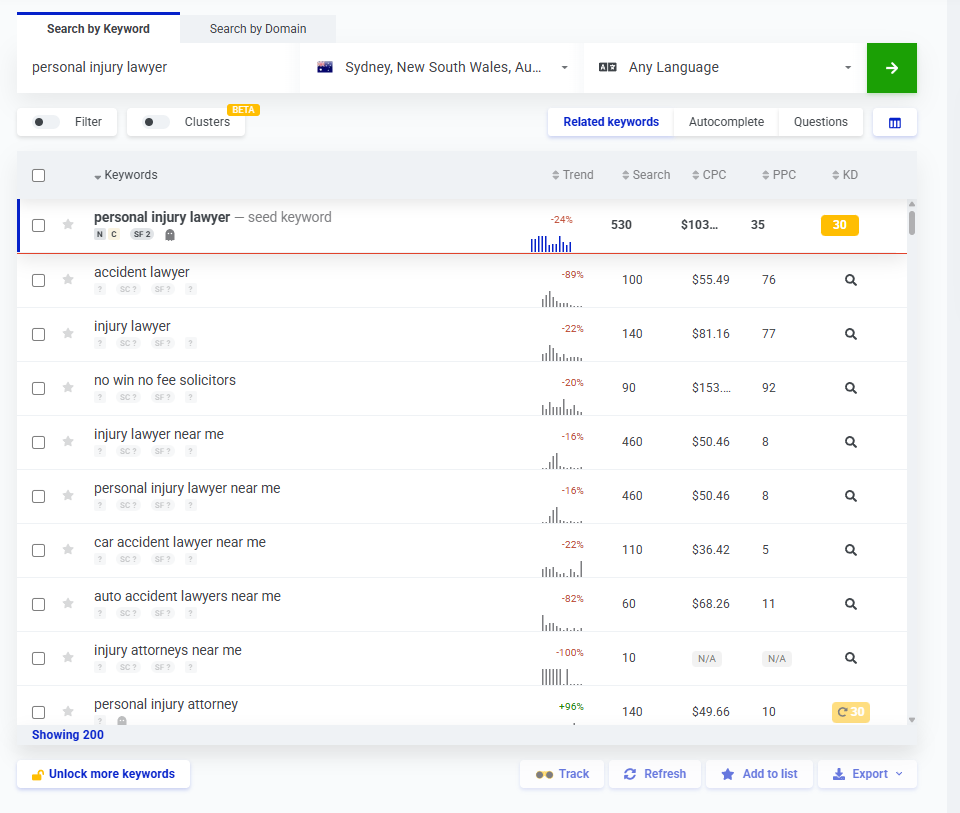
The problem is most firms don't understand the actual economics. They see $80 cost per click and panic. Or they see $500 cost per lead and assume Google Ads doesn't work for law firms.
Both reactions are wrong.
Cost per click doesn't matter. Cost per lead doesn't matter. The only number that matters is cost per profitable client.
If you're paying $2,000 per signed client and that client is worth $60,000 in fees with $25,000 in operating costs, you're making $35,000 profit per client. Your CAC:LTV ratio is 17.5:1. That's phenomenal. You should be spending more, not less.
But if you're paying $300 per client and that client is worth $8,000 in fees with $6,500 in operating costs, you're making $1,500 profit. Your CAC:LTV ratio is 5:1. That's break-even territory at best.
See the difference? Higher cost per client doesn't mean worse performance. It usually means higher-value cases.
Key Insight
Stop looking at cost per lead in isolation. A $2,000 client acquisition cost on a $60,000 case is dramatically more profitable than a $300 client on an $8,000 case. Always calculate your CAC:LTV ratio by practice area.
Budget Requirements: How Much Do You Actually Need?
This is the first question every law firm asks: what's the minimum budget to make Google Ads work?
The honest answer? It depends on your market and your goals. But let me give you some real numbers.
In Australian metro markets like Sydney, Melbourne, or Brisbane, you're looking at $8,000 to $12,000 per month minimum to get any meaningful results. That's the bottom end. It'll get you some data, but you'll be competing with firms spending $50,000 to $100,000+ monthly.
With an $8,000 monthly budget at $60 average cost per click, you're getting about 133 clicks. If your landing page converts at 8% (which is decent), that's 10-11 leads. If 40% of those are qualified, you've got 4-5 quotable leads per month.
That's not a lot. It'll take 3-4 months just to gather enough data to know what's working.
Now compare that to a firm spending $30,000 monthly. They're getting 300 clicks, 24 leads, and 9-10 qualified opportunities per month. They can test different campaigns, keywords, and ad copy simultaneously. They get actionable data in weeks, not months.
Here's what nobody tells you: the firms spending $100,000+ monthly on Google Ads aren't necessarily getting better results per dollar spent. They're getting volume. They're buying enough data to optimise faster. And they're crowding out smaller competitors who can't afford to learn at that pace.
If you're in a major metro market and serious about making Google Ads work, plan for $20,000 to $30,000 monthly. Less than that and you're playing with a handicap.
If you can't afford that budget yet, there's a path forward. Start with less competitive practice areas or case types. Workers compensation typically has lower CPCs than motor vehicle accidents. Slip and fall cases are less competitive than commercial vehicle accidents. Build cashflow with lower-cost cases, then move into the expensive stuff when you can afford the data investment.
Or consider a different approach entirely. If you can't compete in the high-cost Google search market, focus on positioning yourself before prospects even start searching. Our Closed Loop Growth System is built specifically for personal injury firms who want to generate quality leads without competing in expensive search markets. We're often seeing better returns by targeting prospects earlier in their journey, before they hit Google and start comparing firms.
Pro Tip
If your budget is under $20K/month, focus on less competitive practice areas first - workers compensation and slip-and-fall typically have lower CPCs. Build cashflow, then scale into motor vehicle and catastrophic injury keywords.
The Tracking Problem (Or Why Most Firms Are Flying Completely Blind)
Here's the biggest problem with personal injury Google Ads: most firms have no tracking at all. Not bad tracking. No tracking.
They know how much they're spending. They know they're getting calls and forms. But they can't connect a signed client back to the specific campaign, keyword, or ad that generated them.
Why? Because tracking personal injury properly is incredibly complex.
Phone calls break attribution. Someone sees your ad today, calls your main office number tomorrow after Googling your firm name. Which source gets credit?
Multiple touchpoints break attribution. They click your Google Ad, visit your website, leave, see your Facebook retargeting ad, come back via direct traffic, fill out a form. Your CRM attributes it to "direct" because that was the last touchpoint.
Manual data entry breaks attribution. Your intake team asks "how did you hear about us?" The prospect says "I found you online." Intake selects "Website" in the dropdown. But "online" could mean Google Ads, Facebook, organic search, or they saw a billboard then searched your name.
This is why most personal injury firms operate on gut feel rather than data. They know they're spending $15,000 monthly. They know they signed 8 clients last month. But they don't know which 8 clients came from which marketing sources, so they can't calculate actual cost per client by channel.
Quick Win
Even without sophisticated tracking, start asking every new client two specific questions: "What made you reach out today?" and "Where did you first hear about us?" Log both answers separately in your CRM. This gives you directional data immediately.
The Large Firm Advantage
Speak with large personal injury firms spending $200,000+ monthly and you'll find they've built sophisticated tracking infrastructure. BigQuery databases, custom reporting systems, data analysts on staff. They've invested hundreds of thousands in tracking technology that connects every touchpoint across every channel back to signed clients and case revenue.
That's how the big firms know exactly what's working. They're not guessing. They have precise understanding of their ad spend ROI down to the keyword level.
Small and mid-sized firms can't afford that level of infrastructure. So they're stuck making budget decisions based on incomplete data at best, complete guesswork at worst.
The "Poison Data" Layer
Even when firms do have basic tracking in place, there's a second problem: they're feeding bad signals to Google's algorithm.
Think about how basic conversion tracking works. Someone clicks your ad, calls your office or fills out a form. Google fires a conversion event. Success.
But that's not success. That's activity.
30% of those calls are wrong numbers. Another 20% are people looking for free legal aid. 10% are statute-barred. 15% have no viable case due to fault or injury severity. You're lucky if 40% are actually quotable leads.
But Google doesn't know that. As far as the algorithm is concerned, all of those conversions are equally valuable. It's optimising to get you more of... everything. Including the garbage.
You're teaching the algorithm what success looks like, and you're getting it completely wrong.
Key Insight
If your conversion tracking counts every form fill and phone call as a "win," you're actively training Google to find you more unqualified leads. The algorithm optimises for whatever you tell it is valuable - so make sure you're telling it the right thing.
How to Fix This (And Why It's Harder Than It Sounds)
The solution is offline conversion tracking with proper qualification. But implementing this properly requires technology investment and process discipline that most small to mid-sized firms don't have.
Here's what it requires: Someone submits a form or calls from your ad. Google captures their click ID. That lead goes into your CRM. Your intake team qualifies them.
If they're a qualified opportunity, your CRM sends a conversion signal back to Google Ads with the original click ID attached. Now Google knows that specific click led to a qualified lead, not just any lead.
Over time, the algorithm learns patterns. It sees which keywords, ad copy, demographics, and time periods drive qualified leads versus junk. It optimises for quality, not just volume.
I've seen firms reduce lead volume by 60% while increasing signed clients by 40% after implementing proper conversion tracking. Their cost per lead went up. Their cost per client went down. And their total profitability doubled.
That's the power of teaching the algorithm what actually matters.
You need tools like WhatConverts or CallRail for call tracking, CRM integration to capture qualification data, and offline conversion imports configured in Google Ads. This isn't a weekend project. It requires ongoing investment in technology, process discipline, and someone who understands how to connect all the pieces.
Most small personal injury firms don't have this infrastructure. That's not a criticism - it's expensive and complex to build. But it's also why most small firms can't compete effectively with larger firms in Google Ads. The big firms have the data infrastructure to optimise aggressively. Smaller firms are making budget decisions based on incomplete information.
If you can't build sophisticated tracking infrastructure, your best move might be focusing on marketing channels where attribution is cleaner and budgets can be lower. That's where our Closed Loop Growth System comes in - it's designed specifically for firms who want quality leads without needing BigQuery databases and custom reporting systems.
Pro Tip
Start with offline conversion tracking for just one metric: "qualified opportunity." Even without tracking all the way to signed client, this single signal dramatically improves Google's ability to find you better leads.
Account Structure That Actually Performs
Most personal injury Google Ads accounts are structured too broadly. Everything's thrown into one or two campaigns. Different practice areas mixed together. Metro and regional areas lumped in one place.
The result? You can't tell what's working. You're spending $15,000 monthly but you don't know if workplace injury campaigns are profitable while motor vehicle campaigns are bleeding money.
Separate by Practice Area
This is the most important structure decision you'll make.
Motor vehicle accidents, workplace injuries, public liability, medical negligence - these all have different economics. Different case values, different qualification criteria, different conversion rates.
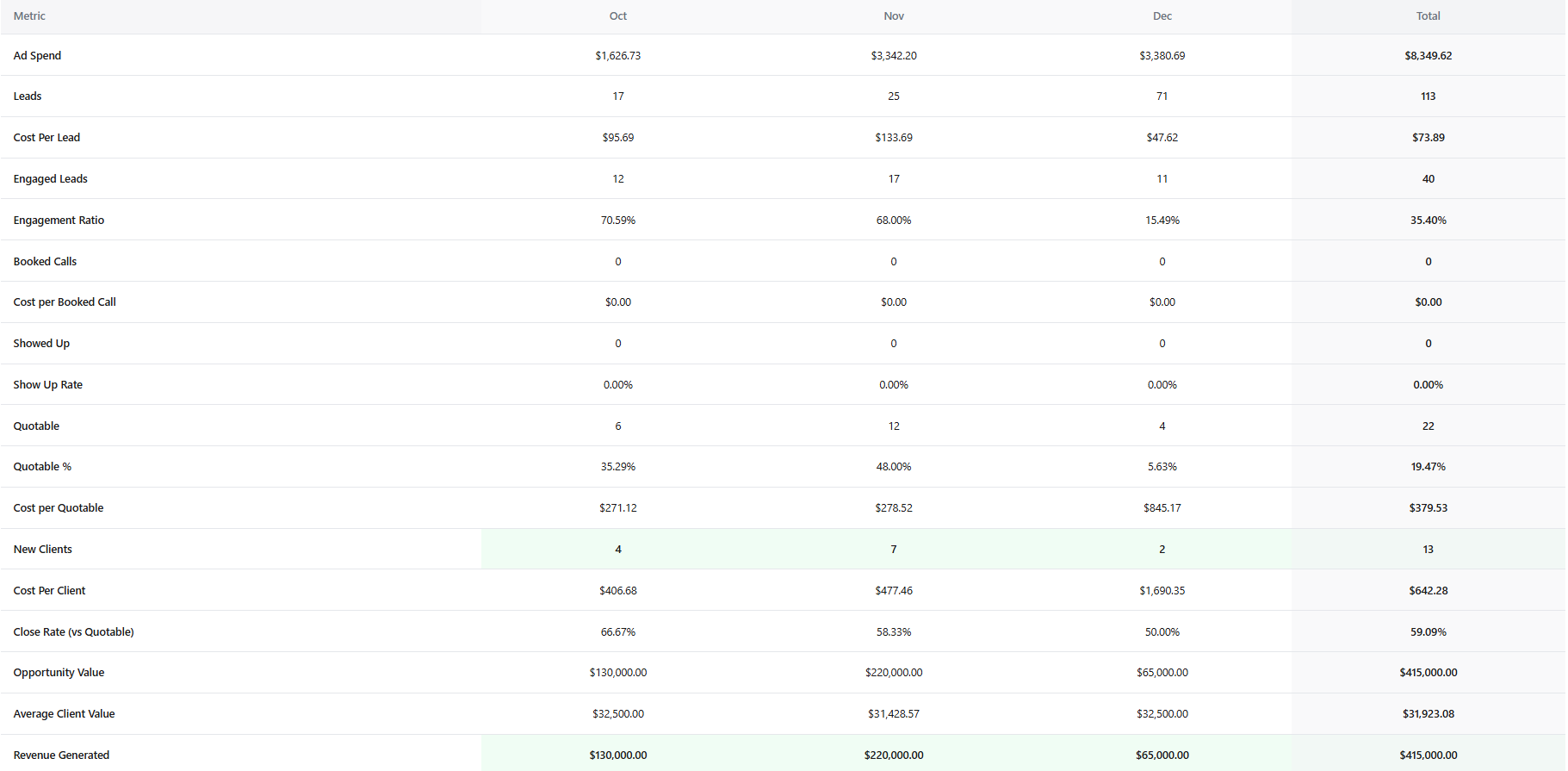
When they're all in one campaign, you see blended performance. Maybe you're spending $20,000 and getting 30 leads at $667 each. Looks okay.
But if you separate by practice area, you might discover:
- Motor vehicle: $12,000 spend, 15 leads, $800 per lead
- Workplace injury: $5,000 spend, 10 leads, $500 per lead
- Public liability: $3,000 spend, 5 leads, $600 per lead
Now you can ask the right questions. Which practice areas convert best once leads hit intake? Which have highest average case value? What's your actual cost per signed client by practice area?
Without offline conversion tracking, you won't have perfect data. But you'll at least know how much you're spending per practice area and how many leads each generates. That's directional data you can use to make budget decisions.
With offline conversions set up properly, you can track all the way through to signed clients and calculate true CAC:LTV by practice area. Offline conversions are what join the dots between ad spend and actual business outcomes. This is how you actually optimise - not guessing based on lead volume, but knowing which practice areas deliver profitable clients.
Use Location-Specific Campaigns for Regional Areas
Australia has massive rural and regional opportunity that most metro-focused firms miss.
Someone in Dubbo searching for a personal injury lawyer doesn't want to see a big Sydney CBD firm. They want a local lawyer who understands regional courts and local medical providers.
If you serve regional areas, create location-specific campaigns. Not just for tracking - for relevance.
Your ad copy changes. "Personal Injury Lawyer Dubbo" or "Workplace Injury Lawyer Central West NSW" resonates better than generic Sydney-based messaging.
Your landing pages change. Show local credentials, local case examples if possible, demonstrate understanding of regional client needs.
Regional campaigns typically have lower competition and lower CPCs than metro markets. You might be paying $60-$80 per click in Sydney while regional areas cost $30-$50. That's a massive advantage if you can service those areas effectively.
The Granularity Question
Should you split campaigns by time of day, individual zip codes, or dozens of micro-segments like US firms do?
Probably not unless you're spending $100,000+ monthly. That level of granularity is overkill for most Australian PI firms.
Focus on practice area separation first. Add regional targeting if relevant. Make sure you're doing daily negative keyword audits (more on this next).
Those three things will give you 80% of the performance improvement with 20% of the complexity.
Quick Win
If you're running everything in one campaign right now, the single highest-impact change you can make today is splitting into separate campaigns by practice area. You'll immediately see which areas are profitable and which are bleeding money.
Broad Match: The Budget Killer
Broad match keywords will destroy your budget faster than anything else if you're not careful.
Here's how broad match works: You bid on "car accident lawyer." Google shows your ad for that keyword, but also for anything Google thinks is related. "Sue my vet for malpractice." "Free legal aid." "How to represent myself in court."
I've seen a firm spend $700+ on clicks from "how do I sue my vet" variations. Wrong intent, wrong practice area, total waste.
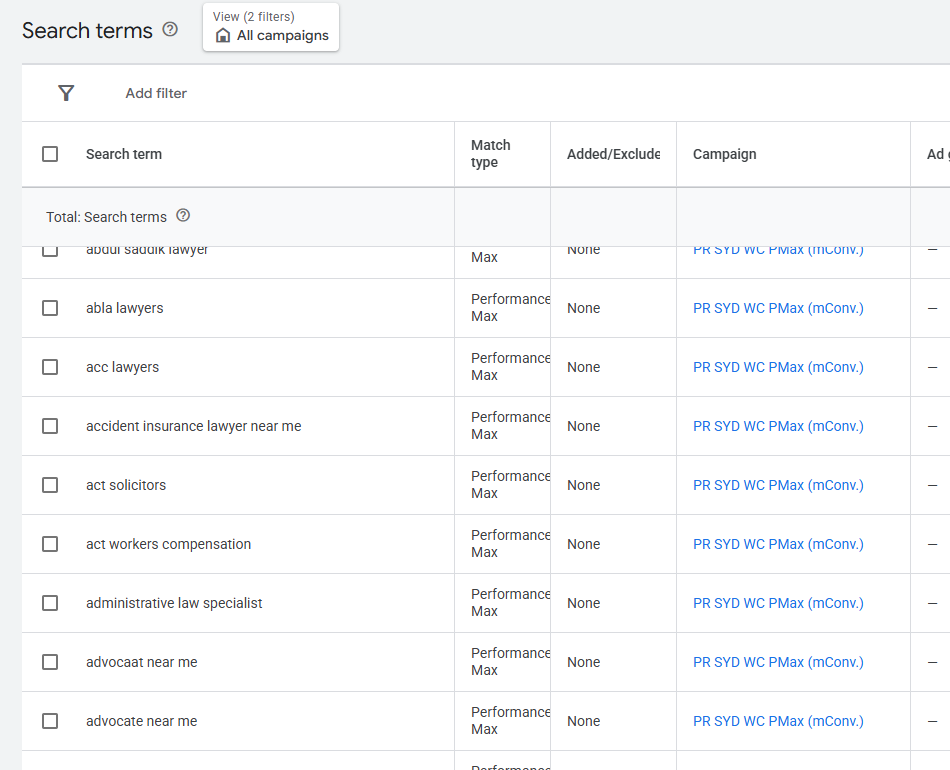
Broad match can work in personal injury, but only if you're obsessive about search term audits and negative keywords.
Every. Single. Day.
Not once a week. Not when you remember. Every day, you need to review your search terms report, identify anything irrelevant, and add it as a negative keyword:
- "Sue vet" - negative
- "Free lawyer" - negative
- "Legal aid" - negative
- "Represent myself" - negative
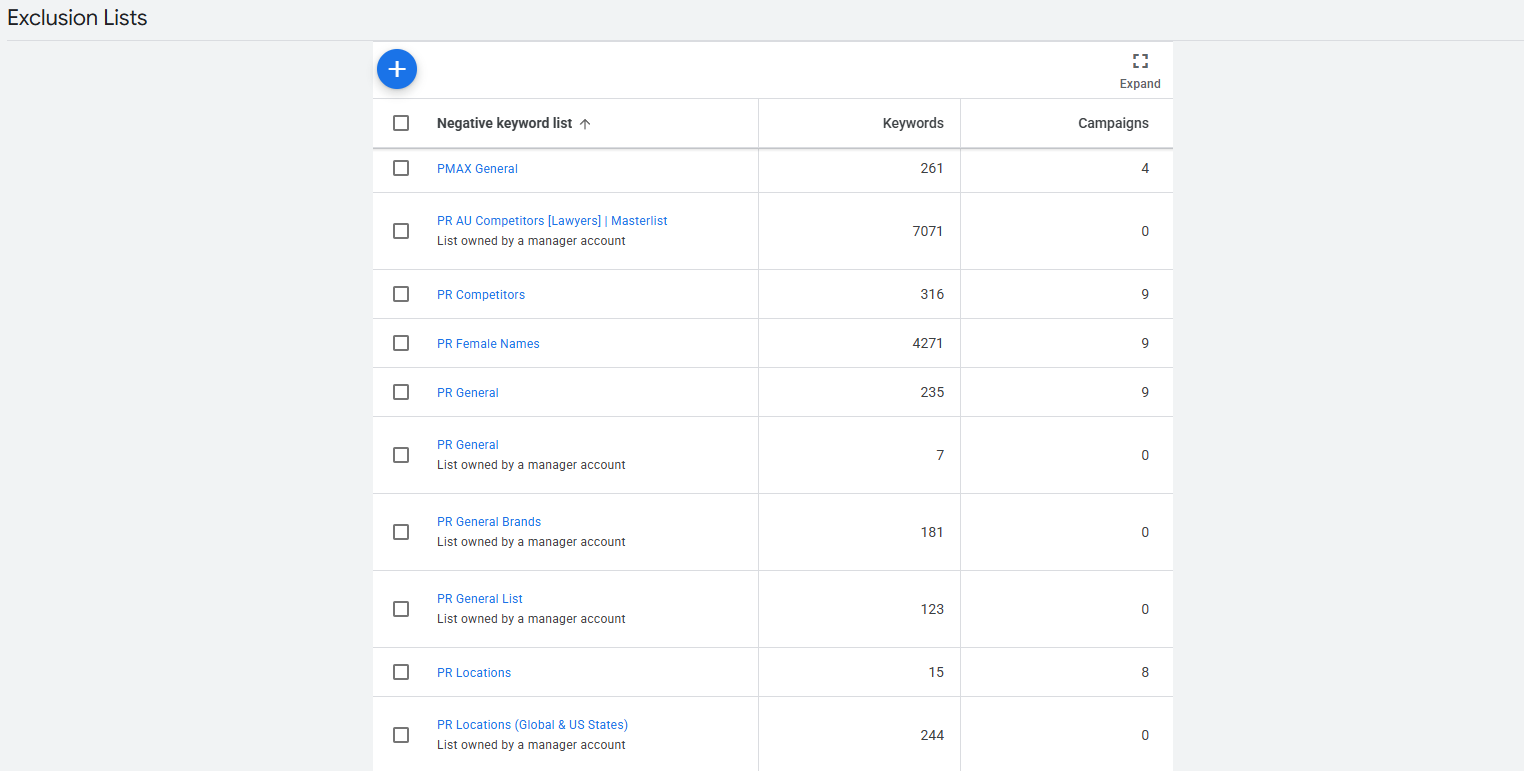
This takes discipline. Most firms don't do it. Their broad match campaigns hemorrhage budget on irrelevant traffic, and they wonder why Google Ads isn't working.
If you can't commit to daily search term audits, don't use broad match. Stick with phrase match and exact match. You'll get less volume, but what you do get will be more relevant.
Pro Tip
Build a master negative keyword list before you launch. Start with 200-300 obvious exclusions (free, pro bono, legal aid, DIY, how to, sue my vet, etc.) and add to it daily. This single habit saves most firms thousands per month.
Conversion Tracking Done Right
We've talked about poison data and offline conversions. Let me get specific about how to actually implement proper tracking.
Step 1: Define Your Conversion Events
You need at least three conversion events tracked:
- Lead received (form submission or qualified call)
- Qualified opportunity (passed intake screening)
- Client signed (retainer signed)
Most firms only track #1. That's activity, not outcomes.
You want #2 and #3 fed back to Google as conversion events. This teaches the algorithm what qualified leads and actual clients look like.
Step 2: Implement Call Tracking
Use a platform like WhatConverts or CallRail. You need dynamic number insertion - unique tracking numbers for each traffic source.
Someone clicks your Google Ad for "motorcycle accident lawyer" and sees tracking number A. Someone clicks your Facebook ad sees tracking number B. Someone comes from organic search sees tracking number C.
Now when they call, you know exactly which source drove that call. The platform records the call, transcribes it (optional but useful), and tags it with source data.
Step 3: Integrate Your CRM
This is where most firms struggle. Your CRM needs to connect to Google Ads via offline conversion imports.
When your intake team qualifies a lead, they update the lead status in the CRM. That triggers a conversion event sent back to Google with the original click ID attached.
Popular legal CRMs like Clio, Lawmatics, and Law Ruler support these integrations. If you're using HubSpot or Salesforce, you may need middleware like Zapier to connect the pieces.
The key is automated triggers. You don't want your team manually exporting data and uploading CSVs. It needs to happen automatically when lead status changes.
Step 4: Configure Google Ads Conversion Actions
In Google Ads, you'll create multiple conversion actions:
- Form submission (primary action, immediate tracking)
- Qualified call (primary action, immediate tracking)
- Qualified opportunity (offline conversion from CRM)
- Client signed (offline conversion from CRM)
Most personal injury firms won't have enough conversion volume to let Google optimise directly on qualified opportunities or signed clients. You'd need 30+ conversions per month minimum for the algorithm to work effectively, and most PI firms simply don't have that volume.
Instead, you'll optimise on form submissions and qualified calls (the immediate conversion events), but you'll still send the qualified opportunity and client signed data back to Google. This helps the algorithm learn patterns over time, even if you're not bidding directly on those events.
The real value of offline conversions isn't always automated bidding - it's the visibility. You can see which campaigns, keywords, and ads are actually driving clients, not just leads. Then you make manual budget allocation decisions based on that data.
Step 5: Use Qualification Questions
This is where you can dramatically improve lead quality without complex tracking infrastructure.
Add qualifying questions to your forms and intake scripts that filter out non-viable prospects before they waste your team's time or pollute your conversion data.
- When did your injury occur? (Filters statute-barred cases - typically 3 years in Australia)
- Have you already settled with insurance? (Filters completed cases)
- Are you looking for free or legal aid services? (Filters non-paying prospects)
- Are you currently represented by another lawyer? (Filters conflicts)
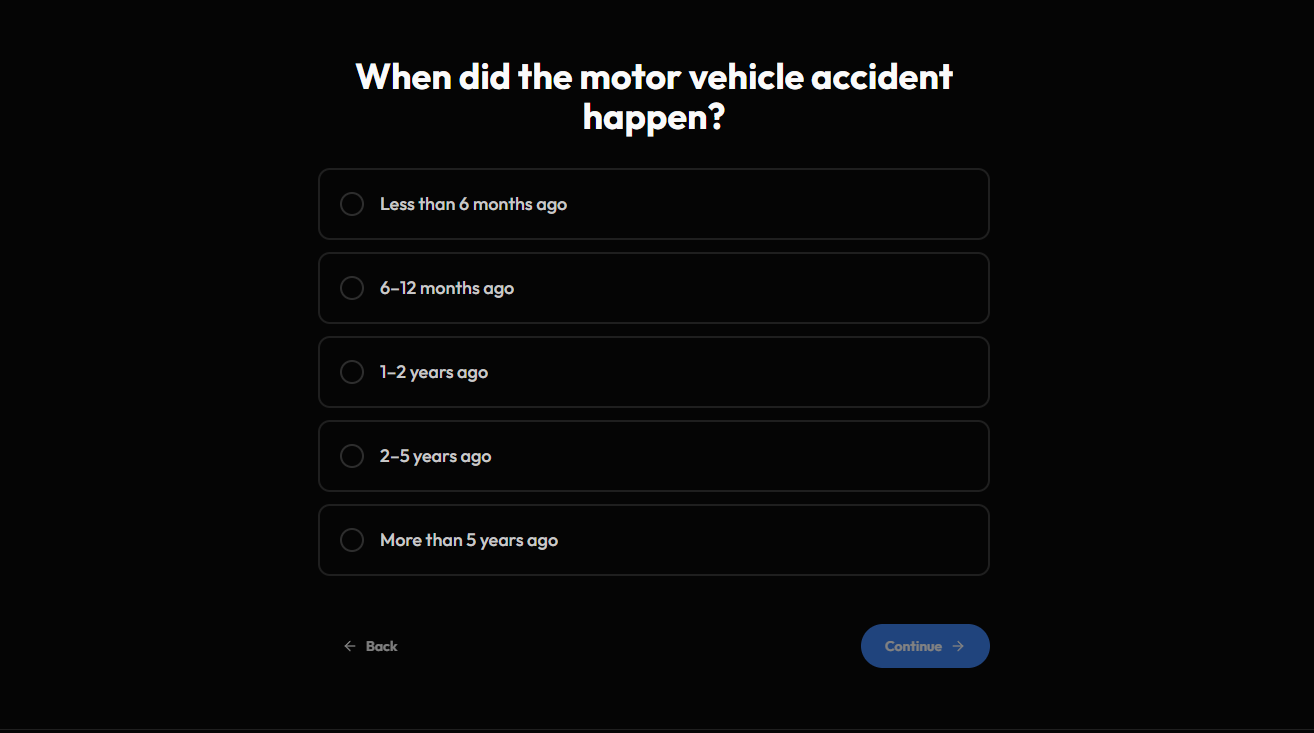
Here's the key: you can use these questions to control whether conversion pixels fire.
If someone indicates they're looking for free legal aid, don't show them the form or phone number. Instead redirect them to a page that says "We specialise in compensation claims for paying clients. For free legal services, please contact Legal Aid NSW/VIC/etc" with links to legal aid resources.
No conversion pixel fires. Your team doesn't waste time on a call that was never going to convert. And you're not teaching Google that "people looking for free legal aid" are valuable prospects.
This is called qualification mechanics, and we cover it in detail in our article on structuring PPC campaigns that convert. The basic principle: only count something as a conversion if it meets your minimum viability criteria.
You can do this with simple conditional logic on your landing pages. Tools like Unbounce, Leadpages, or even custom code on your website can show/hide form elements based on answers to qualifying questions.
The beauty of this approach is it works even without sophisticated tracking infrastructure. You're just being smarter about who gets to submit a form in the first place.
Key Insight
Qualification questions on your forms serve double duty: they filter out junk leads AND they prevent bad conversion signals from reaching Google's algorithm. This is the cheapest, fastest way to improve campaign performance without touching your ad account.
Landing Pages vs Website: Where Should Traffic Go?
Most personal injury firms send Google Ads traffic to their website. Practice area pages, homepage, wherever.
This is a mistake.
Websites are designed for browsing. They have navigation menus, blog posts, attorney bios, about pages. Lots of places for prospects to click around and get distracted before converting.
Landing pages are designed for one thing: conversion. No navigation. No distractions. Just headline, value proposition, trust signals, and a clear path to either call or fill out a form.
When you send traffic to a dedicated landing page, two things happen:
- Conversion rates go up. Usually 2-3x compared to website pages. The focused design eliminates decision fatigue.
- Attribution becomes accurate. Someone clicks your ad, lands on your page, converts on your page. Clean attribution. When you send traffic to your website, they might browse, leave, come back later via direct traffic or organic search, then convert. Now attribution is muddy.
What Makes a High-Converting PI Landing Page?
We covered this in detail in another article, but here are the essentials:
Above the fold:
- Headline matching search intent ("Injured in a Car Accident? We've Secured $50M+ for Sydney Drivers")
- Clear value proposition (your differentiation)
- Form or phone number prominently displayed
- Trust signals (Google reviews, credentials, case results)
- One strong testimonial
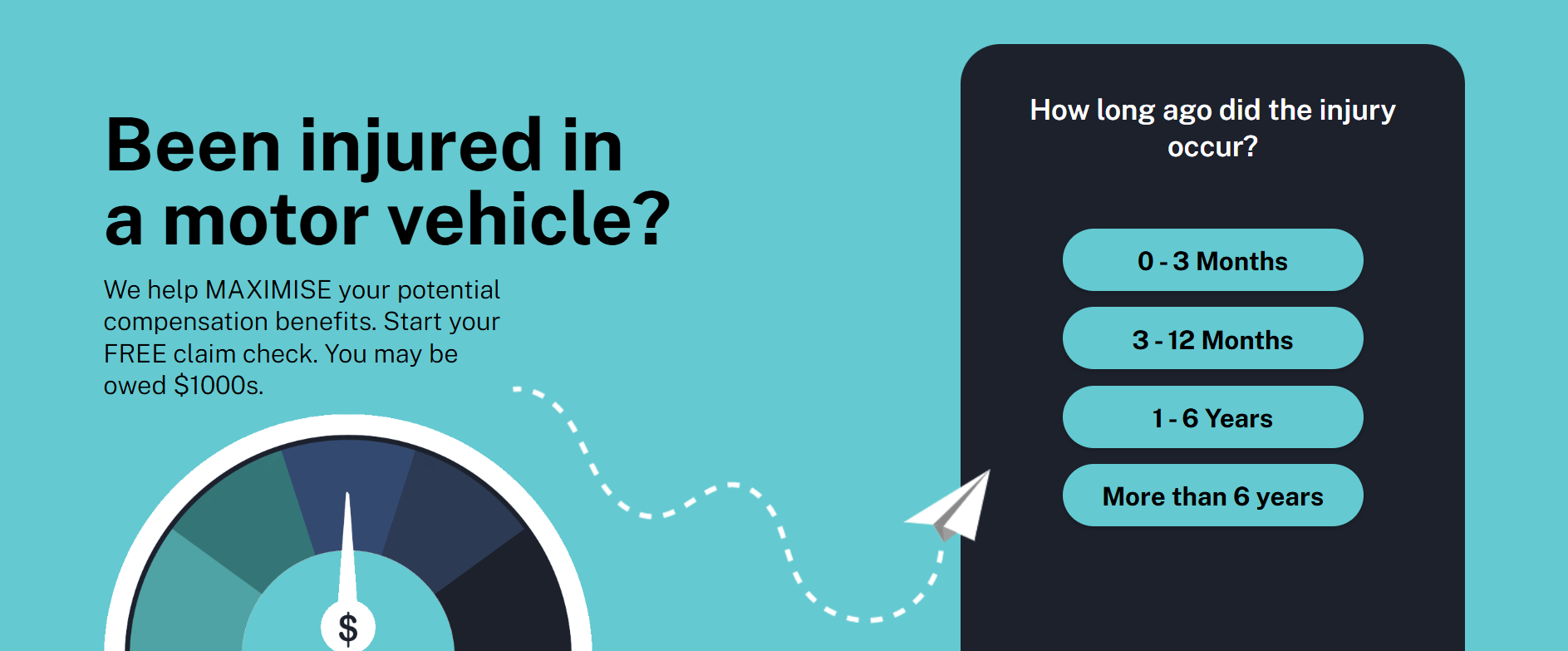
Below the fold:
- Pain/problem section (speak to their frustration with insurance companies lowballing them)
- Why you're different (specific, concrete differentiation - not generic claims)
- Case studies with specific results
- Video testimonials (massively underutilised, but convert incredibly well)
- FAQ section handling objections
- Final CTA with form or phone number again
Put forms both at the top and bottom of the page. Some people convert immediately. Others need to read everything first. Give them conversion opportunities in both places.
Don't send the same landing page to Google Ads and Meta traffic. They need different pages. Google Ads traffic is solution-aware. Meta traffic is problem-aware. The messaging and structure should reflect that difference.
Pro Tip
Build separate landing pages for each practice area AND each traffic source. A "motorcycle accident" landing page from Google Ads should look different from a general personal injury page from Meta ads. Message match is everything.
Ad Copy That Pre-Qualifies
Your ad copy needs to do three things: match search intent, attract clicks, and filter out bad fits.
Most firms nail the first two. They completely miss the third.
Match Search Intent
If someone searches "motorcycle accident lawyer Sydney," your headline should include "motorcycle accident lawyer" or "motorcycle accident compensation" or similar.
Don't show them a generic "personal injury experts" ad. They're looking for someone who specialises in their specific situation. Give them that confidence immediately.
Attract Clicks
Your ad needs a compelling reason to click. Not "experienced and dedicated" because every firm says that. Something concrete:
- "We've secured $50M+ for motorcycle accident victims"
- "Former insurance defence lawyer who knows their tactics"
- "Specialists in catastrophic injury cases with lifetime care needs"
Specific credentials, specific track record, specific expertise. These attract clicks from serious prospects.
Pre-Qualify
This is where most firms fail. They want maximum click volume, so they write ads that appeal to everyone.
Bad idea.
Your ads should include pre-qualifying language that discourages unqualified clicks:
"Were you injured? Not your fault? Free case evaluation for clients seeking compensation."
That simple qualifier - "clients seeking compensation" - filters out people looking for free legal aid. "Not your fault?" filters out people who caused their own accident.
"24/7 intake, no fee unless we win" tells prospects you're contingency-based. Someone looking for hourly billing won't click.
Yes, this reduces click volume. That's fine. You're paying $60+ per click. You want fewer clicks from better prospects, not maximum clicks from anyone.
Quick Win
Add "No Win, No Fee" and "Were you injured through no fault of your own?" to your ad copy today. These two phrases alone filter out a significant percentage of unqualified clicks and save budget immediately.
The Intake Bottleneck (And Why Your Ads Aren't the Problem)
Here's an uncomfortable truth: most personal injury Google Ads campaigns that "don't work" are actually performing fine. The problem is what happens after the lead comes in.
Your intake process is slow. Your qualification is inconsistent. Your follow-up is weak. And you're blaming the advertising.
Speed to Lead Changes Everything
Studies show conversion rates drop 80% if you wait more than 5 minutes to contact a lead. Not 5 hours. 5 minutes.
Think about what's happening on the prospect's end. They just Googled "car accident lawyer Melbourne." They're comparing your firm against three others in different browser tabs. They might fill out forms for two or three firms, or call the first number they see.
Whoever gets back to them first usually wins.
If your intake team is taking 24-48 hours to respond to leads, you're burning advertising money. The leads are fine. They've just moved on to competitors who responded faster.
This is why after-hours intake is essential for personal injury. Accidents happen at all hours. People Google lawyers at 10pm on Sunday. If your phones go to voicemail and your forms don't get responded to until Monday morning, those prospects are gone.
You need live intake 24/7 or at minimum a dialler system with automated CRM integration that:
- Sends SMS confirmation within 60 seconds of form submission
- Makes first call attempt within 5 minutes
- Sends follow-up email if no answer
- Makes second call attempt within 2 hours
- Continues automated sequences until the lead is qualified or exhausted
Key Insight
The bottleneck in most PI campaigns isn't traffic - it's what happens after the lead comes in. Before increasing ad spend, fix your intake speed. A firm responding in 60 seconds will outperform a firm with double the budget responding in 24 hours.
Qualification Consistency Matters
Your intake team needs clear qualification criteria, not vague judgement calls.
For motor vehicle accidents:
- Injury occurred within statute of limitations (usually 2-3 years in Australia)
- Not currently represented by another lawyer
- Injured party has received medical treatment
- Other party was at fault
If these criteria aren't met, the case isn't viable. Your team should know this. They should ask these questions on every call. And they should update the CRM with proper status codes so conversion tracking works.
Inconsistent qualification means inconsistent data. Google receives mixed signals about what a good lead looks like. The algorithm gets confused. Performance suffers.
Sales Training for Intake Teams
Your intake team is your sales team. They need training in how to build rapport quickly, ask qualifying questions naturally, overcome objections, and close prospects on booking consultations.
Most law firms treat intake like administrative work. Wrong. Intake is where cases are won or lost.
A trained intake specialist can convert 40-50% of qualified leads to booked consultations. An untrained one converts 15-20%. Same leads, same firm, completely different outcomes.
If you're spending $20,000 monthly on Google Ads and your intake team is converting at 20% when they could be converting at 45%, you're leaving $10,000+ in monthly revenue on the table.
Sales training pays for itself immediately.
The Economics: What You Should Actually Be Paying
Let's talk numbers. What should personal injury client acquisition actually cost in Australia?
The answer depends entirely on case value and practice area.
For lower-value practice areas like public liability or minor workplace injuries (average case value $8,000-$15,000), you might be acquiring clients for $300-$700 via paid social and $800-$1,500 via Google Ads.
For mid-value practice areas like motor vehicle accidents (average case value $30,000-$50,000), expect $800-$1,500 via paid social and $1,500-$3,000 via Google Ads.
For high-value practice areas like commercial motor vehicle or catastrophic injuries (average case value $80,000+), you might pay $2,000-$4,000 or more per client.
None of these numbers are inherently good or bad. What matters is the ratio between client acquisition cost and case value.
If you're paying $3,000 per client and those clients average $80,000 in fees with $30,000 in operating costs, you're making $50,000 profit per client. CAC:LTV ratio of 16.6:1. Excellent.
If you're paying $400 per client and those clients average $10,000 in fees with $8,000 in operating costs, you're making $2,000 profit per client. CAC:LTV ratio of 5:1. Barely break-even.
The expensive channel is dramatically more profitable.
How to Calculate Your Acceptable CAC
Work backwards from your unit economics:
- Know your average case value by practice area
- Know your operating cost per case (lawyer time, disbursements, overhead)
- Calculate profit per case (value minus costs)
- Decide your target CAC:LTV ratio (5:1 to 10:1 is healthy)
- Divide profit by your target ratio
Example:
- Motor vehicle cases average $45,000 in fees
- Operating costs average $15,000 per case
- Profit per case = $30,000
- Target ratio = 5:1
- Acceptable CAC = $6,000
At $6,000 per client, you can afford to outbid nearly every competitor in your market. Most firms panic at $1,500 per client because they're looking at cost in isolation rather than profit.
Key Insight
Work backwards from your unit economics to calculate what you can actually afford to pay per client. Most firms dramatically underestimate their acceptable CAC because they focus on cost instead of profit margin.
What to Do Right Now
If you're currently running Google Ads for your personal injury firm and you're not getting the results you want, here's what to audit first:
Week 1: Fix your conversion tracking
Stop counting every lead as a conversion. Implement offline conversions based on qualified opportunities and signed clients. This is the foundation of everything else.
Week 2: Restructure your campaigns
Separate by practice area and location. You need granular data to make intelligent budget allocation decisions.
Week 3: Audit your search terms
If you're using broad match, review every search term that triggered your ads in the last 30 days. Add negative keywords aggressively. Broad match only works with obsessive management.
Week 4: Fix your intake process
Implement automated follow-up sequences. Train your team on qualification criteria. Measure speed to lead. Fix whatever's broken here because it's probably costing you more than your ad spend.
Ongoing: Optimise for CAC:LTV, not CAC
Stop trying to drive down cost per client. Start maximising profit per dollar spent on marketing. These are not the same thing.
The firms winning in personal injury Google Ads aren't the ones with the lowest cost per lead. They're the ones who understand which clients are profitable to acquire and what they can afford to pay for them.
Final Thoughts
Personal injury Google Ads is expensive, competitive, and unforgiving. If you go in blind or under-resourced, you'll burn money fast.
But if you understand the economics, implement proper tracking, structure your campaigns correctly, and fix your intake process, it's one of the highest-ROI marketing channels available to law firms.
The difference between firms spending $50,000 monthly profitably and firms spending $10,000 monthly unprofitably isn't budget size. It's tracking infrastructure, account structure, and systems.
Build the infrastructure. Fix the systems. Then scale budget aggressively on what's working.
That's how you win in personal injury Google Ads.
Want us to audit your current Google Ads campaigns and show you exactly where you're leaving money on the table? Book a free strategy call and we'll walk through your account together.
Want us to implement these strategies for you?
Book a free strategy call and let's discuss how we can grow your business.
Book Your Free Call
Written by
Byron Trzeciak
Founder of PixelRush, Byron has spent over a decade mastering digital marketing. His agency has helped 300+ brands grow, managed $10M+ in ad spend, and optimised 400+ landing pages. He shares hard-won strategies so you can skip the learning curve.
Continue Reading
View All →
Why Personal Injury Google Ads Are Getting More Expensive (And What to Do About It)
22 min read
The Lead Response Crisis: Why Your "Bad Leads" Might Actually Be Gold
4 min read