Unlike other Digital Marketing Agencies, we've been at this Google Ads game long enough that we've wrestled with (and resolved) almost every issue possible.
The fact that we've optimised ads for various businesses across a wide range of industries gives us a certain breadth and depth of Google Ads experience.
So if you're trying to determine what's really causing your poor results, you've come to the right place.
After auditing 450+ Google Ads campaigns over many years, the top wasters of your money and resources are the following.
Pro Tip
Before hiring, ask agencies for case studies specifically detailing their success with law firm Google Ads campaigns.
Top 9 Lead Generation Mistakes: Is Your Ad Agency Making Them?
If you're unhappy with your Google Ads results, maybe it's time to cross-examine your PPC Agency.
Are they guilty of the following?
Mistake #1: Trying to Double Your Leads By Doubling Your Ad Spend
When your ad campaign is obviously broken, trying to double your results by increasing your ad spend is a lot like trying to pour more petrol into a broken engine, it's not going to get you very far.
Like my old Maths teacher liked to say: 1 billion x 0 still gives you zero.
It's actually astonishing that an average of 40% of ad budget goes to waste.
According to the Next&Co Digital Media Wastage Report, more than $134.3 million in ad spend was wasted in a single quarter.
Good for Google, bad for you.
Now there are many reasons for wasted ad spending. But some of the most common reasons are:
- Click fraud
- Low ad relevance
- Poor targeting
- Wrong strategy
- Poor choice of channels
Wouldn't it be smarter to figure out how to maximise your ad budget instead?
There are far smarter strategies to get more out of the same ad budget, like:
- Increasing the conversion rate
- Reducing the cost per conversion
- Improving your Google Ad Quality Score
- Executing a sound strategy when it comes to choosing which keywords to bid on (hint: cheapest isn't necessarily the smartest)
At Pixelrush, we treat your budget as our own money, so we take ad budget wastage very seriously. We track and proactively seek as many ways as possible to maximise your ad spend.
By the way, finding wasted PPC spending is one of the things I identify in my free video audits. Keep reading to see how I may be able to do one for you.
Key Insight
Doubling a broken campaign doubles the waste, not the leads. Fix conversion rate, Quality Score and keyword strategy before you touch the budget.
Mistake #2: Do You Have Poorly Structured Ad Campaigns?
This is the case if:
- No segmentation, there's only one campaign and one ad group
- You're bidding on the wrong or sub-optimal keywords
- You're using the wrong match types
- The ad copy is not targeted enough (so it's not persuasive)
- You're not bidding on your own brand name
If your ads are set to the wrong Geotargeting setting (a commonly overlooked error, because you really have to know where to look for it if you want to change the settings), then you could end up paying for the clicks of those who are outside of your target geographical area.
Considering that the average cost per lead for the legal industry is the highest at $73.70 (for context, according to Wordstream's 2021 Ad Benchmark Report, the average CPL across all industries is $41.40; for dentists it is $42.95, and for business services $62.18), the costs from this one mistake alone could add up.
Granted, those are US-based figures. For Australia, based on what I've seen, the average CPL for the legal industry sits around $100, but keep in mind there are many areas of law and some are easier to acquire than others (for example we've been successfully getting criminal law leads for $30).
Note that it's the average figure. You can defy industry benchmarks if you know what you're doing.
This is why your agency's ad strategy should consider:
- Your target CPL
- Lead quality
- The stages of the typical buying cycle
- How many "touches" or interactions with a typical prospect it usually takes to convert them
- Geographic location
- Search vs Display Network
- Device (desktop or tablet vs mobile)
They should also consider how many qualified leads you need to talk to per month in order to reach your target number of open cases per month.
For example, if you need at least 20 new open cases per month and your average lead-to-open-case conversion rate is 20%, then you need a PPC lead goal of at least 100 per month.
To make room for slow months, longer sales cycles and economic downturns, let's double that PPC lead goal. So they need to give you 200 qualified leads per month in order for you to get at least 20 new open cases a month.
If your cost per lead is $100, that means $100 x 200 = $20,000 per month in ad spend.
Can you imagine the difference it would make to your bottom line if you halved your CPL alone? How about if you improve your lead-to-open-cases close rate as well as halving your CPL? You'll have more than 2x open cases per month at half the previous ad spend.
Well, one of the fastest ways to raise your lead-to-open-cases conversion rate is getting more highly qualified leads in the first place. Because if the majority of the leads your agency is giving you are already pre-vetted and highly qualified, there should be very little reason why you can't close most of them.
The higher the quality of the leads you talk to, the higher your chances of being able to persuade them how your firm fits their needs.
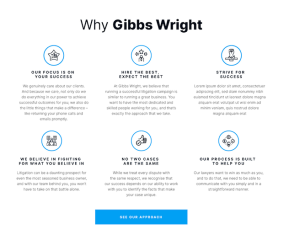
This is one of the major things we optimised for when we worked with Gibbs Wright Litigation. After just 5 months we were able to increase the leads they were getting by 35% and reduce their CPL by 68%.
Keep reading because later we discuss other key CPL-reducing strategies that you'd definitely want to apply.
Pro Tip
Work your CPL target backwards from the number of open cases you need each month, then pressure-test whether the current account structure could ever deliver it.
Mistake #3: Is Your Budget Being Spent on Wasteful Keywords, a.k.a. Traffic Traps?
These are keywords that are either irrelevant or used by people who will never convert.
Watch Out for Fake Conversions
When we first audited the Google Ads campaigns of one of our lawyer clients (this was before we worked with them), they were advertising on YouTube and also on Google Display Network (GDN).
Their analytics was reporting conversions on GDN as high as 128%. A conversion rate of 128% means they were getting 1.28 leads out of 1 visitor. Obviously, that's not even mathematically possible.
It showed 17 conversions at that time with a CPC of A$104.99. Moreover, their Display conversions ranged from 33%, 50%, 100%, and 128%. Whereas their search conversion rate was in the range of 1% to 4%. Huge disparity.
Considering the high CPC, that's practically a bleeding artery that needed to be stitched. That's how we knew those were spam conversions. Unfortunately, this is quite common in those channels.
We also spotted a similar trend when we first audited the PPC account of other law firms. So if these issues apply (or you suspect they might) to you, it's possible that third parties are generating ad revenue or trying to hide costs by faking conversions of some kind.
On face value it's easy to be impressed by these numbers, but you need to know how to spot the anomalies that prove you're simply wasting your money.
Not Treating GDN Traffic Differently. Don't get me wrong, there's a long list of good reasons to advertise on GDN. You can target by keywords, interests, affinity, similar audiences, and more. So I'm not knocking it.
But because GDN audiences are typically ice cold, you have to approach them differently than you would search traffic. Because they are much colder, typically you have to start with a different mechanic like a quiz to attract them and entice them into your funnel. Once they're on your email list, you can nurture them until they turn into a much warmer lead.
Not selling to them right away is the smart way to treat GDN traffic. Otherwise, it's like asking someone to marry you minutes after finding their profile on a dating app.
If your PPC agency isn't making these kinds of distinctions, then they're likely bleeding your ad spend by the bucketload.
Non-Converting Keywords
Another ad budget black hole is when your ads keep showing up for searches your ads shouldn't be showing up for.
If your PPC agency keeps burning through your ad budget AND giving you lots of leads but most of them are unqualified, this could be the culprit.
At Pixelrush, we always analyse the keywords getting the clicks but not converting. We identify the intent behind these keywords.
Sometimes the reason these are high-impression, high-click yet low-converting keywords is because they are irrelevant to what you offer to begin with. When that is the case, we add them to the Negative Keywords List.
For example, an ad showing up for "litigation lawyer salary Australia" is hugely irrelevant to someone wanting information about lawyers' salaries. You don't want this to happen to your ads.
This is just one of the many reasons why refining your Negative Keywords List regularly is a must. The more we do this, the less unqualified leads find you and the more qualified leads find you. This tends to drive up the conversion rate.
Fast Fix
Pull last quarter's Search Terms Report, sort by cost with zero conversions, and move everything obviously irrelevant into a shared Negative Keyword list this week.
Mistake #4: Do Your Ads Lead Prospects To Poorly Crafted Landing Pages?
You have poorly crafted landing pages if the following are true:
The Content is Irrelevant to The Visitor
This is the case if your prospects are being taken to a landing page that is inconsistent with the ad they clicked.
For example, if a prospect searches for "how to get back my rental bond deposit from the residential tenancies authority" and your ad leads them to your default contact us page, they are going to click away.
But if you lead them to a resource page where you answer several questions like "All about Bond Disputes", "A tenant's rights and responsibilities", "When is it considered breaking and breaching the lease", and "The Residential Tenancies Authority's process for bond refunds", they are more likely to stay on the page and even devour every word.
The Page is Not Ultra-Targeted
We know we're preaching to the converted when we say that the more personalised your messaging is, the more persuasive it is. The same applies to your Google Ads landing pages.
If a prospect goes to Google and types "wrongful dismissal" and finds one of your pages, and that visitor has been wrongfully dismissed after 20 years of service but the page they landed on is talking about workplace harassment or wrongful demotion only, then they are less likely to convert into a lead because it's not addressing their particular issue.
This is why keeping everything consistent between your ads and the corresponding landing pages they lead to has a direct impact on your conversions. And this is also why you shouldn't just direct all your ads to your website's home page by default.
If you want highly qualified leads, then you also need to craft dedicated landing pages: hyper-focused, ultra-targeted Google Ads landing pages.
The Page Doesn't Set You Apart From Your Competitors
Either your Unique Value Proposition is unclear or lacking, or it's not being conveyed skilfully at all.
If the messaging does not highlight the compelling reasons why your prospects should choose you over your competitors, or your site design looks cheap or outdated, then you won't come across as credible.
Your landing pages must highlight what makes your service better than the rest. Your visitors must be able to easily identify the key differentiators between you and your competitors.
Maybe it's about demonstrating the exceptional client experience your prospects can look forward to. Or maybe it's about your unmatched expertise in a particular area. Whatever it is, your prospects must get it right away when they land on your website or landing pages.
It's Confusing. Sometimes what makes perfect sense to you is actually discombobulating for your visitors. Even having more than two different CTA buttons instead of only one can make certain people click away.
If the landing page is not cohesive with your branding, it could backfire later, too. There must be congruence between your landing page and your website.
Not Optimised For Mobile Users
We live in an increasingly mobile world. According to Statista's figures, more than 54% of all online traffic comes from mobile devices (excluding tablets).
As such, if your website and/or landing pages are not mobile responsive and cross-browser compatible, you're definitely losing leads.
If your desktop traffic is converting a lot more than your mobile traffic, mobile unresponsiveness could be part of the issue. You can't expect the same graphic image (that is created for desktop) with the same copy and design to render the same way on mobile. The text size, button size and placements, and copy will need to be adjusted accordingly to create a smooth mobile experience.
Another factor to consider is speed. Think back to the last time you clicked on an ad from your mobile phone. Did the page load quickly? Did the content satisfy your expectations? Did it engage you enough to continue reading, or did you click away immediately?
Getting someone to click on your ad only for them to bounce right away is exactly what you want to avoid.
But what is considered "fast" and what's "slow"?
- 5 seconds to load: faster than roughly 25% of the web.
- 2.9 seconds to load: faster than roughly 50% of the web.
- 1.7 seconds to load: faster than roughly 75% of the web.
Source: Semrush.
Aiming to get your pages to load within 3 seconds or less is a good speed to aim for. Then you can keep optimising from there.
If you've already hired someone to take care of your website, they should already be optimising for speed without you needing to ask.
If not, tools like Google's PageSpeed Insights will help you identify the elements on your page that are taking a long time to load.
Weak or Confusing Calls to Action. There are several ways one can get the CTA wrong:
- It's camouflaged or buried somewhere. CTAs that blend in with the background rarely get noticed.
- The timing is wrong. Too soon or too late CTAs don't get the clicks.
- Far too many Calls to Action. When there are too many to choose from, most people usually opt for none.
- The benefits they will get by clicking is unclear, so they don't take action. You're telling them what to do without first giving them the appropriate context or reasons (that serve them, not you) why they should do it.

Concrete numbers (settlement values, cases won) outperform generic "trusted lawyers" copy on high-stakes legal landing pages.
There are many more elements that can hurt your conversions, but those are the major ones.
If you're getting a decent amount of clicks but things go downhill because of your low-converting landing pages, you're not alone. It's actually quite common.
This is why we created Client Convert, our solution for low-converting websites and landing pages. With Client Convert you won't even have to think about these mistakes because it's specifically designed and developed with built-in persuasion mechanisms.
If you want us to take a look at your landing pages and the ads leading to them, we'll be able to tell you what the possible issues are and how you might be able to solve them by conducting an audit of your Google Ads campaign. Get in touch here.
Expert Tip
Aim for pages that load in under 3 seconds, put your strongest proof point above the fold, and give visitors one obvious next step rather than five competing CTAs.
Mistake #5: Are You Tracking The Results of Your Marketing Efforts and Campaigns?
When you clearly understand which areas of your marketing are performing best, you know exactly where to invest to get more results, and which elements are just a waste of time.
The implications of not tracking (or not doing it properly) are enormous:
- Without accurate data, you can't make data-driven decisions.
- If you don't know which traffic sources are producing your highest-converting prospects, how can you pump more money into the ads and campaigns that led them to you?
- If you don't know which ads or landing pages are performing poorly, you will just continue losing money on them while not knowing any better.
- Without knowing which ones are your worst and most lucrative campaigns, you can't scale or optimise efficiently.
In one of my video audits, for example, data showed prospects were interacting with ads on desktop but converting mostly on mobile. That's valuable info they could leverage.
In another video audit for a big law firm, we identified that they had a phone number on every page of their website but were not tracking calls from it.
So I told them about a free call forwarding script they could use. You place a script onto the site and it hunts for the phone number and dynamically swaps it with a Google Ads tracking number, allowing you to track the phone calls.
Let's say we spend $1,000 and generate ten phone calls but we aren't tracking them. You see the 10 calls and get ready for the high five. At the same time, I haven't seen the calls in Google Ads, all I see is $1,000 that didn't convert. It's at this point where it's easy to say "hey, this is waste, I'm going to be awesome and get rid of it". In reality, you're making bad decisions based on a lack of data.
I can appreciate why some businesses are uncomfortable with call tracking, but to fine-tune your campaigns effectively we need to track all key conversion actions like people picking up the phone and calling.
Some agencies do track when people click on a phone number from your site. But if you're dealing with people who are more likely to be dialling from their landline or smartphone instead, this is important to track. Tracking clicks versus actual phone calls means your data is always skewed toward mobiles.
When we manage your Google Ads, we always pay attention to these metrics:
- Cost per click
- Cost per conversion
- Return on ad spend
- Quality Score
- Impression share
- Conversion rate of everything
- Success rate of your sales calls
More importantly, the reports we send you highlight all the important actionable insights you can leverage for your day-to-day business decisions and big-picture strategies.
Key Point
If you can't tell which keyword, ad and landing page produced each signed matter, you're not optimising a campaign, you're funding a guess.
Mistake #6: Do Your Lead Generation Systems Have Built-In Filters That Keep Unqualified Leads Out?
"We're getting leads but 95% of them are crap."
If only we had a dollar every time we heard that.
Even dealing with just 20 low-quality leads per month, though it seems inconsequential, can put a significant and unnecessary strain on your resources.
If, like Spencer from Gibbs Wright Lawyers, you have higher outgoings because you are employing educated, qualified people to answer your prospects' questions in order to provide a top-notch client experience right from the get-go, then you definitely want to avoid inundating them with low-quality leads.
To do so would be a huge money suck for your firm.
But what if your leads went through an effective filtering process so that only the ones you actually want get to talk to you or your staff?
If your staff never got to waste even a second talking to unqualified leads, how much would that affect your firm's closing rates?
Filtering your leads is exactly what our Client Pathway system does. It's like a diagnostic quiz that we ask your prospects to fill out. And they'll be happy to oblige because in the end they'll get tailored answers relevant to their situation.

A live Client Pathway step: prospects self-select their matter type so unqualified enquiries never reach your fee earners.
We can customise it accordingly to fulfil your purposes and the use cases are endless.
Client Pathway forms accomplish the following jobs:
- By getting personalised answers to some of your prospects' most pressing concerns, your prospects get a sense of progress, without it taking any of your time (that is, beyond the initial setup).
- By getting prospects to answer important questions, you get to pre-qualify them based on their answers.
After we implemented our Client Pathway system with Spencer and the Gibbs Wright team, Gibbs Wright saved $55,000 in additional staff costs by improving the quality of leads prior to the initial consultation.
Quick Win
Add two or three qualifier questions to your intake form (matter type, location, timeframe) and route unqualified enquiries to a self-serve resource instead of your fee earners.
Mistake #7: Is Your PPC Agency Pulling the "Set and Forget" Wool Over Your Eyes?
Tracking can get convoluted when advertisers use several conversion tags for various purposes, import conversions from CRMs, or import conversion events from your Analytics app.
While it provides invaluable nuance to our data, it also makes it harder to realise when conversions are double-counted or if obsolete ones are still populating.
That's why, if left unchecked for even just a few months, these tags could get obsolete, duplicate conversion counts, mess with bidding algorithms, and create data noise.
That's why you need to observe a religious cleaning up routine at least quarterly. If you want profitable campaigns, it can't be a set and forget kind of deal.
Sadly, this is actually quite common in our industry.
Unlike some PPC agencies, we never set and forget your campaigns. We keep an eye on every metric, constantly analyse your campaigns, and fine-tune them in every way possible.
We always know what we're tracking, where from, and why, and we keep everything clean and updated. More importantly, you get constant updates so you always know your vitals. You also have access to live dashboards so you know exactly what's going on, at any given time. Everything we do is 100% transparent.
Pro Tip
Ask your agency for the change log from the last 30 days. If the answer is vague or the account looks untouched, that's your signal to renegotiate or move on.
Mistake #8: Are You Protecting Your Campaigns From Fraudulent and Invalid Clicks?
No one is immune to click fraud nowadays.
You may be a victim of click fraud if you identify any of the following:
- Repetitive clicks from similar ISPs but showing zero conversions
- Spikes in costs that exceed the norm or expectations
- Unexplainable anomalies in performance data
Let's look at some data.
According to PPC Protect's Click Fraud Report for 2020-21, here are the percentages of fraudulent or invalid clicks per channel:
- 36% of display ad clicks
- 11% of search ad clicks
- 17% of CTV (connected TV) impressions
The report was based on first-hand data from their database of almost 1 billion ad clicks and 100 billion data points.
Their findings showed that only 13% of accounts monitored had little to no fraudulent or invalid activity.
Not surprisingly, Display Ads is the most vulnerable channel to click fraud.
"Primarily down to the incentive of revenue share from every click, many fraud rings and criminal gangs spend a considerable amount of time defrauding advertisers with fake websites."
Click Fraud Report for 2020-21
Search ads were found to have only 11% fraudulent clicks. However, although clicking on other people's search ads represents no monetary gain for fraud rings, unethical competitors do gain by engaging in search ads click fraud.
They also found that 38% of fraudulent activities are due to automated bots.
In the Legal industry, the click fraud rate in 2020 was 16.54% (the highest was Education at 31.14%, next was Local Trades at 21.26% and third was Financial at 18.73%).
And that's not all. It's also forecasted to only get worse. Comparing the 2020 figures with 2019 (based on the largest ad markets) and looking at the click fraud rate change by country, Australia and India led the pack at a 37% increase.
So what can you do about it? The easiest way is to use click fraud prevention platforms.
With Pixelrush, we won't let your competition or anything else take advantage of you. All our campaigns are protected by PPC Protect to reduce fraudulent and invalid clicks, and thus save you money.
We chose PPC Protect because they exercise transparency, accountability, and reliability. For example, we like how they publish their false positives rate. This makes total sense because if you're going to trust someone to block fraudulent clicks for you, you would want them to report accurate figures and not inflated ones just to make themselves look good.
We also get access to all ad clicks because they are logged, so we can track and manually analyse where these clicks are coming from to recognise red flags for you.
Fast Fix
Install click-fraud protection, exclude the Search Partner and Display networks by default on high-CPC legal keywords, and review IP exclusion lists every month.
Mistake #9: Not Having an Efficient System for Nurturing, Following Up With, and Closing Leads
According to Salesforce, it takes a business 6 to 8 marketing "touches" on average to generate a viable sales-ready lead.
Am I saying that turning leads into open cases is part of your ad agency's responsibility?
After all, getting highly qualified leads coming in steadily and in droves is one thing. But converting them into paying clients is another.
While following up with leads and nurturing them falls more on your sales staff's shoulders, if your ad agency is really committed to your growth, they should have systems in place designed to magnify and elevate your sales team's efficiency and effectiveness.
That's how we at Pixelrush do it because we see this as a partnership. If we do everything we can to grow your business, it impacts us directly.
We recognise that not all leads are equal. Some leads have engaged with your marketing in some way but aren't necessarily fully convinced yet that hiring your firm is their best option. They still need more information.
Some leads are farther along the buying cycle. They've shown strong interest and have already taken crucial steps, and they're much closer to signing on the dotted line.
Your sales team can be more effective if they have a system that honours the phase where each lead is and then nurtures and converts them appropriately.
On the other hand, there's your prospects and their concerns. Due to the nature of their situation, your prospects will always have questions. Some of those questions can be answered by a paralegal, while some require specialist expertise from higher up members of your team.
Therefore, having readily accessible resources that give prospects immediate clarity on certain topics could help you move them along the buying cycle without it actually taking your time.
This is another benefit you can gain from using our Client Pathway system (which we discussed briefly in Mistake #6).
How Client Pathway works for your prospects:
- Guides prospects on what and how much information to provide (which is often an unknown and a scary experience for them).
- Helps prospects benefit from your knowledge even before you make direct contact with them. Result: they see you as more professional and trustworthy.
- Encourages leads to give more specific information (e.g. "describe your dispute"). Result: builds trust and saves lawyers time when they call.
Key Insight
Most legal leads don't convert on the first call, they convert on the seventh touch. A five-minute speed-to-lead SLA plus a 6-8 week email sequence usually doubles close rate without extra ad spend.
The Solutions: How to Actually Fix These Mistakes
Now that you know the nine most common lead generation mistakes, here is how we solve them for the law firms we work with.
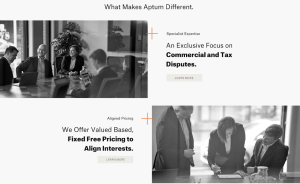
Your Unique Value Proposition (UVP) is How You Answer "Why You?"
It's how you convey your differentiation.
Nowadays, you're dealing with prospects who shop around, compare, read reviews online, and create spreadsheets listing the pros and cons of several lawyers.
Gone are the days when they're happy to just ask a friend or relative for referrals and, without doing any further investigation, hire the referred lawyer on the spot.
More than ever, your marketing must create ways to give your prospects at least one powerful reason to choose you over the competition.
When you work with us, we make sure we help you create and strengthen your UVP, and then we communicate your UVP powerfully at every possible touchpoint.
The Page Bolsters Your Credibility
Nowadays, it's no longer enough for you to be perceived as credible. You must be perceived as more credible than your competition.
These are some of the ways Client Convert positions you as the superior choice:
- Feature plenty of testimonials and reviews that convey not only the various client profiles you serve, but also the multi-faceted aspects of the value you offer.
- Your UVP is not one-dimensional. You could have a UVP at the brand level, product level, prospect level, or process level. Client Convert conveys your UVP on all of these levels, whenever possible. We have our own process designed to first extract and then refine the value you offer, then guide you through amplifying it.
- If you can have professional photos and videos made for your website and landing pages, we highly recommend you do so.

Video testimonials do more heavy lifting than written reviews on high-consideration legal enquiries, real faces, real outcomes.
The Page Captures Leads Effectively
A lead magnet is a free (but highly valuable) resource that you can give to your prospects to convert them from website visitors into warm leads.
It must align with their pain, issue or question that they're dealing with at that particular time in their life.
Examples of lead magnets you may want to use:
- A webinar tackling a common issue (e.g. "Everything You Need to Know About Writing a Will").
- A free consultation.
- A series of videos tackling the most important points they need to know if they're involved in a criminal case (for example).
- An online quiz that asks them several questions, and then produces a downloadable instant resource containing free, expert advice based on their answers.
It Has a Clear, Prominent and Compelling Call to Action
Client Convert orchestrates all the elements of the page towards its one goal: to get the visitor to take the desired action.
When it comes to Calls to Action (CTAs), it's not about the font, button size and colour.
Our CTAs are effective because prospects perfectly understand the benefits they will gain if they take the recommended action, they feel their pains and fears are understood, their questions and doubts are answered, they know what to expect, and so they move forward with confidence.
If landing page optimisation is of particular interest to you, read my detailed tips (featuring several case studies with before and after webpage results) about crafting high-converting Google Ads landing pages here: 7 Game-changing Lessons I Learned from Optimising Google Ads Landing Pages.
Expert Tip
Test your UVP by removing your firm's name from your homepage headline. If a competitor could paste their logo on it and it would still read true, it isn't a UVP yet.
Filter Out Unqualified Leads
Increasing the efficiency of your sales staff is one of our performance goals. We don't stop at just giving you highly qualified leads as much as possible.
If you're employing highly qualified people to deal with prospects' enquiries, then you'd definitely want to maximise their efficiency by protecting them from time-wasters.
That's exactly what we've designed our Client Pathway solution to do.

The modal flow that walks prospects through pre-qualification before they ever hit your intake team.
Client Pathway is a form system that helps you pre-qualify each prospect by sending them through a strategic sequence of carefully crafted questions. Depending on their answers, your sales team gets to prioritise them accordingly. For example, say you're dealing with property law but not rental disputes. We can make the form ask each prospect whether their issue is a rental dispute. If yes, we can knock them back and re-route them to more appropriate channels that could help.
Not having to deal with them saves you time and resources, and you get to speak only to those who are truly qualified or a good fit for you.
This is just one use case. We can customise Client Pathway according to your purpose. For example, we can use it as a quiz, and based on their answers, give them semi-customised answers and next-step recommendations.
By getting them to answer certain questions, you gather even more intel about them that you can use to help them move forward.
How Client Pathway can benefit your prospects:
- Guides prospects on what and how much information to provide (often an unknown and scary experience for them).
- Helps prospects benefit from your knowledge even before you make direct contact with them. Result: they see you as more professional and trustworthy.
- Encourages leads to give more specific information (e.g. "describe your dispute in great detail"). Result: builds trust and saves lawyers time when they call.
Pro Tip
Implement a brief pre-qualification form or script to filter out unqualified leads before they consume valuable staff time.
Track Your Conversion Actions
Question for you if you have been investing in Google Ads for a while: how much of the money you've been putting towards your ads has directly impacted your business growth, and by how much?
I mean accurate numbers, not guesstimates.
Proper tracking gives you a better understanding of the effectiveness and the ROI of your campaigns. Armed with this reliable intel, you'll be able to confidently make wiser business calls and more profitable ad budgeting decisions.
That's why it still shocks me every time I see how the Google Ads accounts I get to audit neglect this.
In my experience, over 71% of Google Ads campaigns are either not tracking conversions, or they're tracking some but they're doing it incorrectly.
For law firms, examples of meaningful actions you should be tracking are form completions, phone calls from your website, sign-ups, calls from ads, contact us form submissions, and landing page submissions among others.
Doing so will allow you to know which exact search terms generate your best results.
Top tracking tips:
- Set up Google Tag Manager
- Connect your Google Ads with Google Analytics
- Use call trackers (like Google call forwarding) to track phone calls
- Ensure you set form completions, email opt-ins, and online enquiries as conversion goals
- Set up form tracking (with or without Thank You pages, or by using Events in Google Analytics)
Because we treat your ad budget like it's our own, we never do the set and forget kind of Google Ads management.
Quick Win
Set up conversion tracking for every call, form submission, and key page visit in your ad platforms today.
Get Your Free Video Audit
If you're unsatisfied with your current agency's results or your campaign performance, get in touch or book a strategy call.
We'd be happy to conduct a comprehensive audit of your current setup and send you our analysis and insights in a video format. We'll detail exactly what's making you lose money, highlight the most profitable yet low-effort opportunities, and tell you how you can exploit them.
Fast Fix
If your agency isn't providing clear ROI metrics, request a performance audit or seek a second opinion.
Want us to implement these strategies for you?
Book a free strategy call and let's discuss how we can grow your business.
Book Your Free Call

Written by
Byron Trzeciak
Founder of PixelRush, Byron has spent over a decade mastering digital marketing. His agency has helped 300+ brands grow, managed $10M+ in ad spend, and optimised 400+ landing pages. He shares hard-won strategies so you can skip the learning curve.
Continue Reading
More on Law Firm Marketing
Can Personal Injury Lawyers Advertise in Queensland? PIPA and What It Really Means for Your Marketing
What PIPA actually allows for personal injury advertising in Queensland: the methods, the content limits, why Google Ads and SEO are fine but images and claims aren't, and where lawyers disagree.
How to Build a Marketing Funnel for a Personal Injury Firm: A–Z Guide
The complete A–Z system for a personal injury firm marketing funnel that signs real cases: the maths, the ads, the landing page, intake and tracking, backed by real Australian benchmarks.
Personal Injury Google Ads in Australia: Why Costs Keep Climbing, and What Boutique Firms Can Do About It
Your Google Ads bills keep climbing, but your lead quality keeps dropping. Here's why PI advertising costs are skyrocketing and what smart firms are doing differently.
Should Law Firms Qualify Leads or Take Everyone Who Calls? (The Hidden Cost of Bad Prospects)
Your phone's ringing. Another potential client. Your gut reaction? Answer it, book the consultation, and hope they've got money and a decent case.